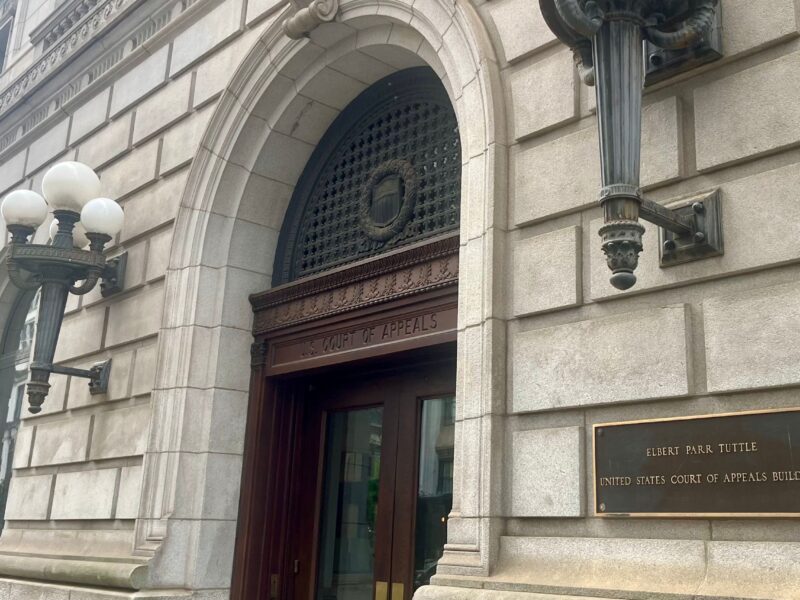
The U.S. Court of Appeals for the Eleventh Circuit reversed a lower court's decision and returned a mercury pollution lawsuit to federal court, ruling against the city of Brunswick, Georgia in its effort to pursue claims against Georgia Power and Honeywell International.
Brunswick alleged that both companies failed to prevent hazardous waste, including mercury, from escaping a Superfund site located in the city. The municipality sought to hold the defendants liable for environmental contamination and associated damages.
The appellate court's decision represents a procedural victory for Georgia Power and Honeywell, though the underlying environmental claims remain active in federal court. The Eleventh Circuit's ruling addresses jurisdictional questions about where and how the case proceeds rather than the merits of Brunswick's pollution allegations.
Superfund sites are contaminated locations designated under the Comprehensive Environmental Response, Compensation, and Liability Act (CERCLA). Property owners and operators at such sites face strict liability for cleanup costs and environmental damage. Georgia Power and Honeywell's success in this appeal likely stemmed from arguments regarding proper venue or federal question jurisdiction rather than defenses on the environmental claims themselves.
The remand to federal court maintains federal jurisdiction over the matter, which typically handles complex environmental disputes involving CERCLA liability. Brunswick must now proceed with its mercury pollution claims in the federal forum rather than pursuing alternative legal strategies the city may have attempted.
For Georgia Power and Honeywell, the appellate victory provides tactical advantages by keeping the case in federal rather than state court, where environmental defendants often face more predictable procedural rules and jury compositions. For Brunswick residents and the city, the lawsuit remains viable as a mechanism to hold the companies accountable for environmental contamination and to recover cleanup costs.
The case reflects ongoing tensions between municipalities protecting public health and industrial defendants defending against environmental liability claims at legacy contamination sites.