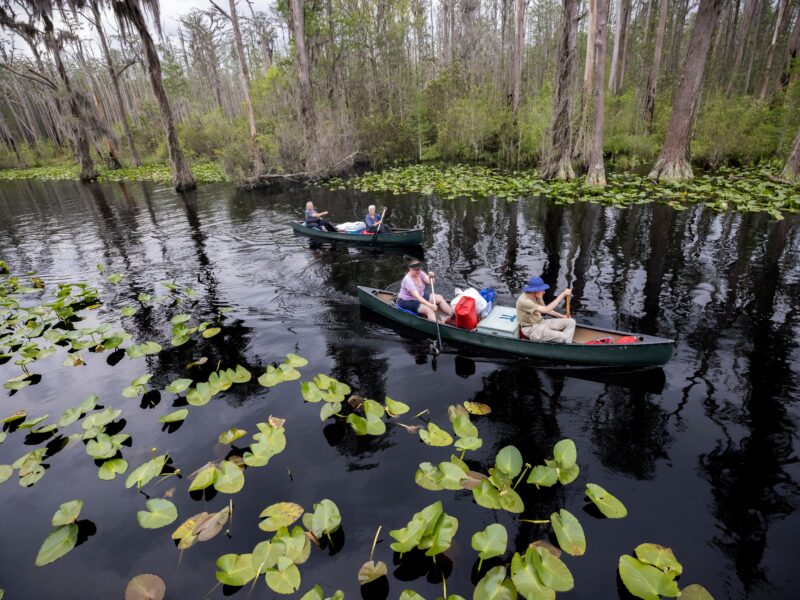
Georgia's Okefenokee Swamp has been designated a UNESCO World Heritage Site, joining a cohort of natural and cultural landmarks selected for their global significance. The designation recognizes the 438,000-acre wetland straddling the Georgia-Florida border as a place of exceptional ecological, geological, and hydrological value.
The Okefenokee contains one of the largest intact freshwater ecosystems in the continental United States. Its unique landscape supports diverse wildlife, including alligators, black bears, and rare plant species found nowhere else. The swamp's peat deposits store carbon reserves comparable to significant natural carbon sinks, making it relevant to climate change discussions.
UNESCO World Heritage status carries no binding legal authority under U.S. domestic law. The designation functions as a voluntary international recognition that elevates a site's profile for conservation purposes and tourism management. However, the status creates diplomatic and moral incentives for protection.
For Georgia and Florida, the designation may influence land-use decisions and environmental policy. State officials can leverage UNESCO status to restrict certain industrial or development projects. Federal agencies, including the U.S. National Park Service and Fish and Wildlife Service, coordinate conservation efforts on lands they manage within or adjacent to the Okefenokee.
The listing affects local economies and communities. Increased tourism often accompanies World Heritage designation. Businesses near the site may benefit from visitor spending, while conservation restrictions could limit extraction activities or commercial development historically permitted in wetland areas.
Existing federal protections under the Clean Water Act and Endangered Species Act remain the primary legal framework governing the Okefenokee. UNESCO recognition operates alongside rather than replacing these statutes. State governments retain authority over intrastate water management, though federal authority extends to interstate water disputes and migratory species protection.
Conservation groups supported the designation as a tool for long-term protection. The swamp faces pressure