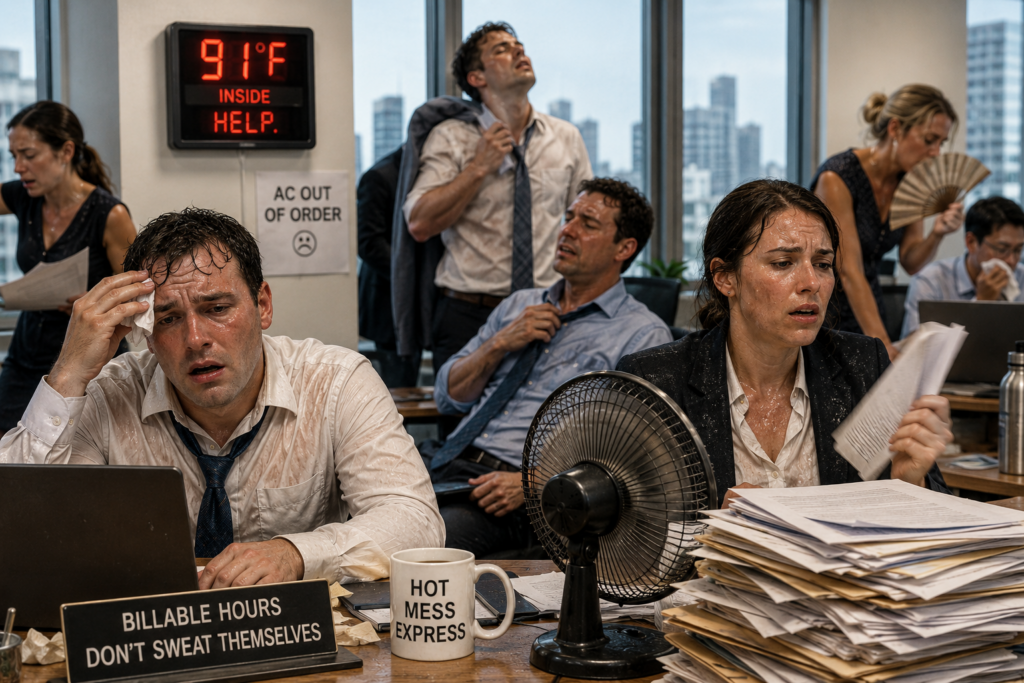
A newly merged global law firm sent its London office home after air conditioning failures during a heatwave made the workplace untenable. The incident reflects workplace safety and operational challenges facing consolidated firms integrating multiple office locations and facilities management systems.
The firm's decision to dismiss staff rather than maintain operations highlights employers' legal obligations under UK health and safety regulations. The Health and Safety at Work etc. Act 1974 requires employers to ensure, so far as reasonably practicable, the health, safety, and welfare of employees. The Workplace (Health, Safety and Welfare) Regulations 1992 specifically mandate adequate temperature control. When indoor temperatures exceed reasonable thresholds without air conditioning during extreme heat, employers face liability for heat-related illness and potential regulatory enforcement action from the Health and Safety Executive.
Large law firms operate under intense performance pressures, with billable hours and client demands creating tension against worker welfare concerns. Sending staff home represents an admission that working conditions violated legal standards, yet it also protects the firm from liability claims should employees suffer heat-induced illness on premises.
The merger context adds operational complexity. Consolidated firms must harmonize facilities management across previously independent offices. Legacy systems may be incompatible. Staff relocations and space consolidations can delay infrastructure upgrades. This particular incident suggests integration challenges extended to basic climate control systems.
For newly merged firms, facility failures carry reputational risks beyond immediate discomfort. Associates evaluating lateral moves factor in workplace conditions. Clients expect seamless service from merged entities. A heatwave shutdown signals operational mismanagement during critical integration phases.
The London office incident raises broader questions about firm planning for climate-related workplace disruptions. As extreme heat events increase, law firms must evaluate whether current facilities infrastructure supports reliable operations. This includes backup systems, remote work policies, and contingency planning.
The firm's response, while protecting immediate employee welfare, also demonstrates