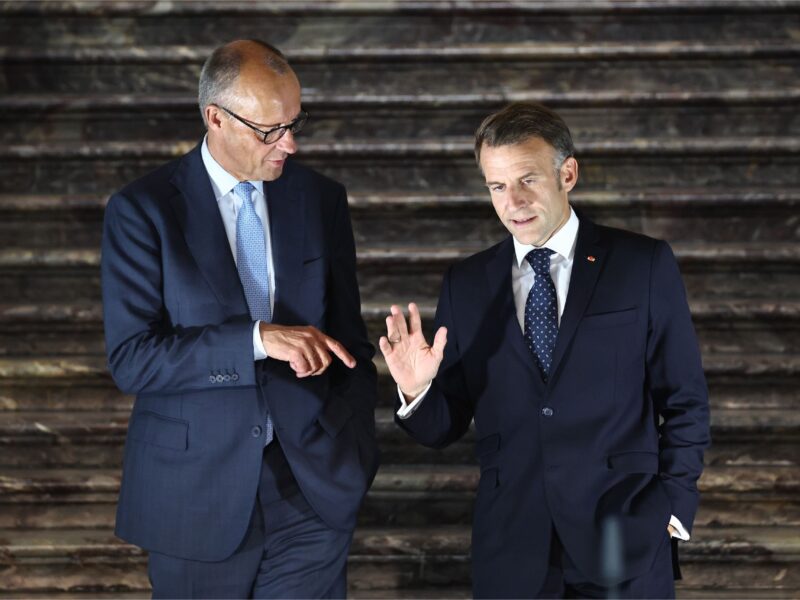
Germany and France launched a formal nuclear cooperation framework, reversing decades of German reluctance toward joint atomic energy initiatives. The agreement signals a broader European pivot toward energy independence and security self-sufficiency in response to geopolitical tensions.
German officials previously rejected similar French proposals, citing post-World War II constitutional and political sensitivities around nuclear weapons programs. The shift reflects changed calculations about Europe's strategic vulnerability, particularly following Russia's invasion of Ukraine and concerns about energy supply disruption.
The framework covers civilian nuclear technology development, reactor modernization, and supply chain resilience. Both nations committed to coordinated positions on nuclear energy policy within European Union regulatory structures. The agreement does not address weapons development or military applications, remaining consistent with non-proliferation treaties binding both signatories.
France operates Europe's largest nuclear fleet and seeks to expand capacity to meet decarbonization targets. Germany's energy transition traditionally relied on renewable sources and imported natural gas, making it vulnerable to supply shocks. The cooperation enables German access to French reactor expertise and potential technology transfer for advanced fuel cycles and waste management protocols.
The Élysée Treaty framework, which governs Franco-German defense and economic cooperation since 1963, provides the legal foundation for this nuclear arrangement. Both governments expect the partnership to advance EU energy sovereignty while strengthening NATO-aligned security architecture without triggering International Atomic Energy Agency scrutiny or NATO treaty complications.
Energy and industry analysts project the agreement could accelerate European nuclear reactor construction timelines. Germany may seek minority stakes in French nuclear ventures or joint development of next-generation reactor designs. Implementation requires coordination with EU competition law, Germany's Federal Network Agency, and French Autorité de Sûreté Nucléaire regulatory approvals.
The initiative also positions France and Germany as Europe's nuclear policy leaders within broader EU discussions about energy independence from Russian hydrocarbon supplies. Other European nations including Poland and Sweden have signaled interest