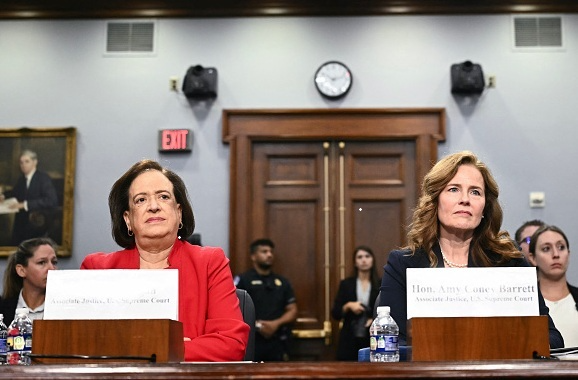
Justice Amy Coney Barrett has publicly addressed the personal security threats facing Supreme Court justices, revealing that the role now requires explaining bulletproof vests and security measures to her children. Barrett's comments underscore the court's push for increased federal funding to protect justices and their families from escalating threats.
The Supreme Court has requested additional appropriations to enhance security infrastructure and personnel following a surge in threatening communications and incidents targeting justices. Barrett's disclosure reflects a broader crisis within the federal judiciary: justices can no longer separate their professional duties from existential family safety concerns.
The threats intensified after the court's 2022 decision in Dobbs v. Jackson Women's Health Organization, which eliminated the federal constitutional right to abortion. Security incidents have included protests at justices' homes, attempted murders, and sustained harassment campaigns. The Court's police force has expanded its mission from protecting the building to protecting justices' residences and families.
Barrett's willingness to discuss the personal impact represents a rare public acknowledgment by a sitting justice of how security threats compromise judicial independence and family life. Justices traditionally maintain strict separation between their public roles and private circumstances. Her statement signals the extraordinary nature of current conditions.
The judiciary's request for additional security funding faces congressional scrutiny. Some lawmakers question whether increased spending addresses root causes or merely manages symptoms of deepening political polarization. Others argue that adequate protection is essential to judicial function itself. A judge cannot render impartial decisions while fearing for family members' safety.
The Judicial Branch Security Improvement Act, passed in 2022, allocated funds for enhanced protection but implementation has proceeded slower than threats have escalated. Justice Department officials have indicated that current appropriations fall short of actual security requirements.
Barrett's comments carry weight beyond personal narrative. They document how threats against federal judges operate as a form of coercion, potentially influencing judicial decision-making and threatening the institutional independence