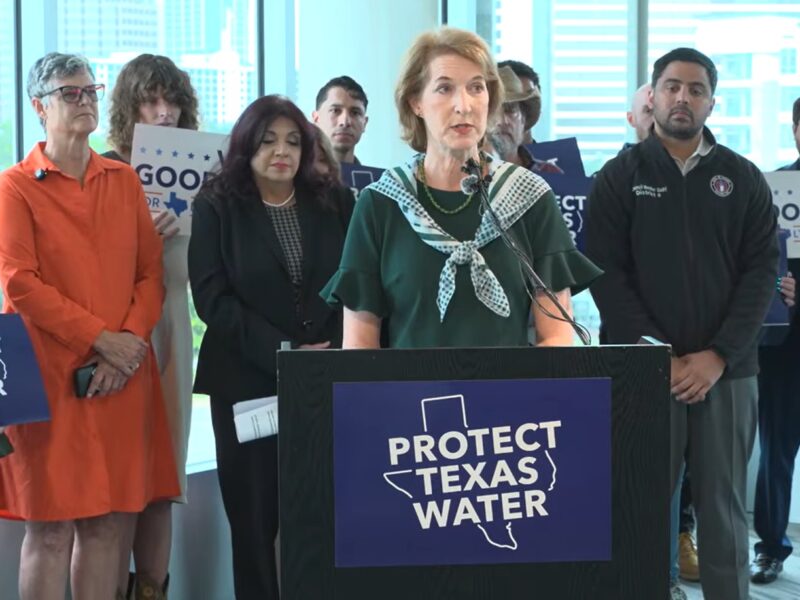
Vikki Goodwin, a Texas lieutenant governor candidate, announced Tuesday a call for a moratorium on data center development across the state. Goodwin held the press conference alongside state and local leaders to push for restrictions on the rapidly expanding industry.
Texas currently leads the nation in data center growth. The facilities consume vast amounts of electricity and water, straining local infrastructure and driving up utility costs for residents and businesses. Data centers housing artificial intelligence servers have become particularly energy-intensive, raising concerns about grid stability and environmental impact.
Goodwin's proposal targets the boom in data center construction, which has accelerated dramatically as tech companies compete to build AI computing capacity. The moratorium would pause new data center projects while policymakers develop regulations addressing infrastructure demands, environmental consequences, and tax incentives offered to attract the facilities.
The political push reflects growing tension between economic development goals and quality-of-life concerns in Texas communities. Some regions have offered substantial tax breaks to data center operators, reducing local tax revenue while straining water supplies and electrical grids. Rural and suburban areas near Austin, Dallas, and San Antonio have faced particular pressure from data center expansion.
Goodwin's position signals that data center regulation could become a campaign issue in the 2026 lieutenant governor's race. The office holds significant influence over the Texas Legislature's agenda and priorities.
The data center industry argues that Texas benefits from job creation and economic investment. However, local officials and residents increasingly question whether tax incentives justify the infrastructure costs and environmental consequences. Some municipalities have begun imposing restrictions or higher fees on data center projects without waiting for state action.
The moratorium proposal lacks immediate legislative backing, but growing political attention to data center impacts could prompt lawmakers to enact regulations balancing industry growth with community needs.