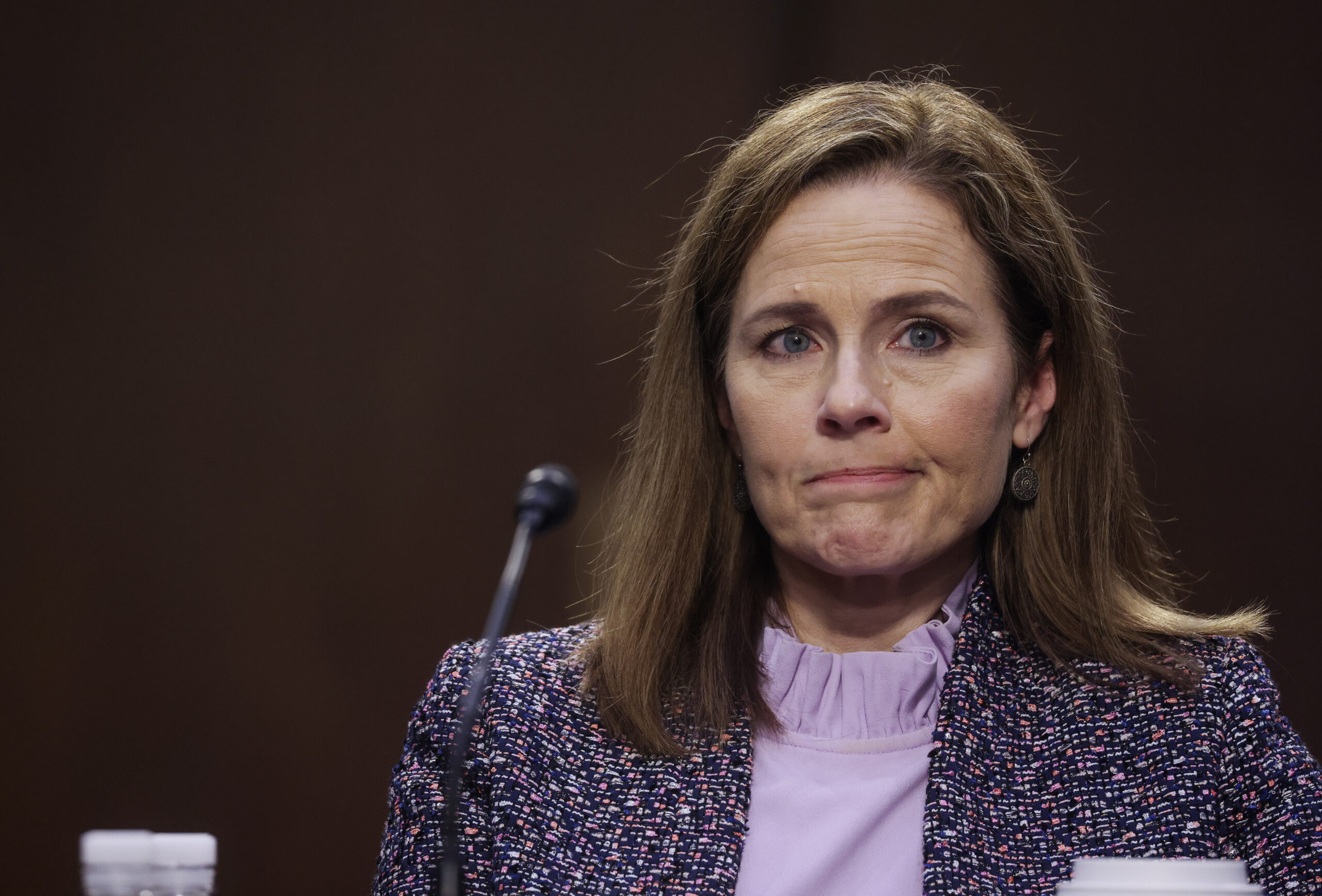
Justice Amy Coney Barrett has shifted her position on judicial transparency and accountability. During her 2020 Senate confirmation hearings, Barrett urged critics to read Supreme Court opinions in full rather than rely on summaries or commentary. She framed this as the proper way to understand judicial reasoning.
Years into her tenure on the Court, Barrett now contends that it is inappropriate to expect the Supreme Court to explain its decisions beyond the written opinions themselves. This stance represents a notable reversal from her earlier emphasis on rigorous engagement with judicial text.
The contrast exposes a tension in Barrett's judicial philosophy. Her confirmation testimony suggested that detailed opinions would provide sufficient accountability and transparency. Citizens and legal observers who disagreed with rulings could examine the Court's reasoning directly. That framing positioned opinion-reading as both a civic duty and a remedy for public concern.
Her current position weakens that accountability mechanism. If the Court bears no obligation to explain decisions beyond the published opinions, and if those opinions themselves face criticism for opacity or insufficient reasoning, the public has limited recourse to understand judicial decision-making. The expectation that readers must parse complex legal documents without further clarification from the justices themselves creates an asymmetry between those with legal training and ordinary citizens.
This pivot reflects broader questions about Supreme Court legitimacy and public trust. As the Court's decisions have grown more controversial, justices have faced mounting pressure to justify their reasoning. Barrett's earlier posture suggested that detailed opinions fulfilled this obligation. Her current stance suggests the opposite. explaining decisions further would somehow compromise judicial independence or exceed appropriate bounds.
The contradiction undermines a key justification offered during her confirmation process. Senators and Barrett herself emphasized that detailed opinions would serve as accountability measures. Yet she now resists expectations that the Court provide anything beyond what already appears in print.
This shift carries practical implications for how the public engages with the Supreme Court. If justices reject responsibility for explaining their reasoning