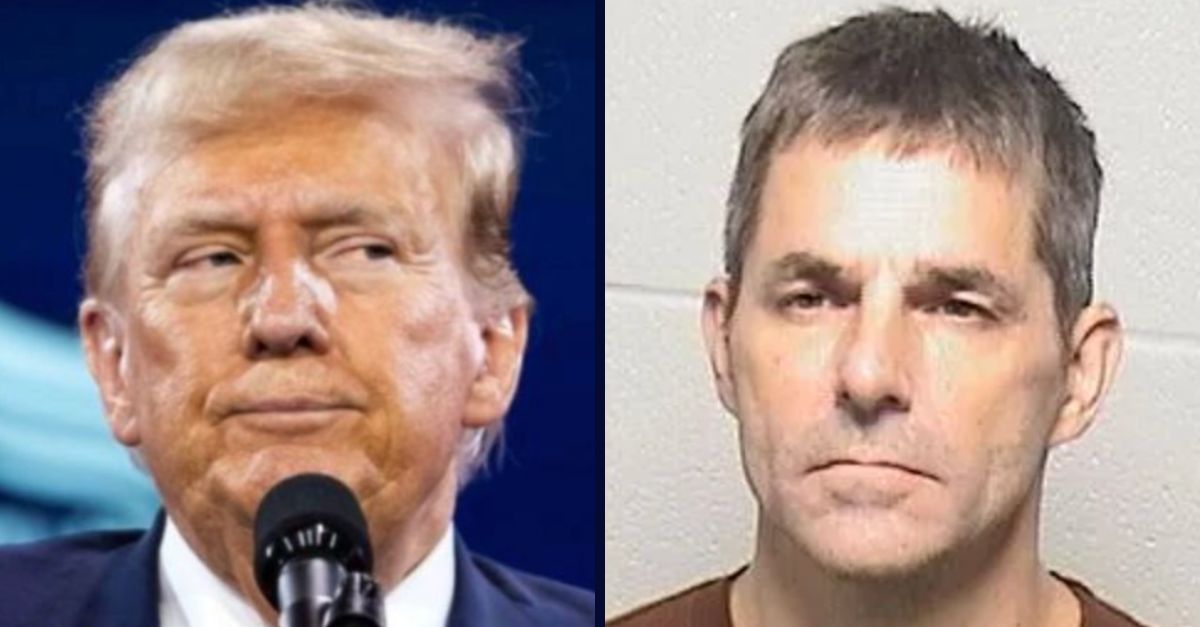
Trent Schneider, 58, of Winthrop, Illinois, has been sentenced to prison after making at least 18 threats to assassinate President Donald Trump across social media posts and videos. In one video posted as a selfie, Schneider stated he could "get a lot of f—ing guns" and would "take care of business," explicitly insisting he was serious about his threats.
Federal prosecutors charged Schneider under 18 U.S.C. Section 871, which criminalizes threats against the president of the United States. This statute carries significant penalties because threats against sitting presidents receive priority investigation by the Secret Service and federal law enforcement. The prosecution presented evidence that Schneider's threats were not isolated incidents but rather a sustained pattern of violent rhetoric directed at Trump across multiple platforms.
The case reflects the federal government's aggressive enforcement of threats against presidential figures. Courts consistently reject free speech defenses in these cases, treating detailed, repeated threats as unprotected speech that falls outside First Amendment protections. Schneider's explicit statements about acquiring firearms and his repeated assertions that he was "serious" about his intentions distinguished his case from protected political speech or hyperbole.
This prosecution follows the pattern established in dozens of similar cases since 2016. Federal authorities have pursued threatening posts, videos, and messages with particular intensity when the defendant expresses specific intent, mentions weapons, or demonstrates sustained focus on the target. The sentencing sends a clear message that social media posts threatening presidential violence carry real criminal consequences, regardless of whether the defendant possessed the means or concrete plan to carry out such threats.
The case also underscores how law enforcement monitors public social media for threatening content. Posts and videos are not anonymous to investigators who can identify creators, access IP addresses, and subpoena platform data. Schneider's self-recorded video evidence proved particularly damaging to any defense claim that his statements were