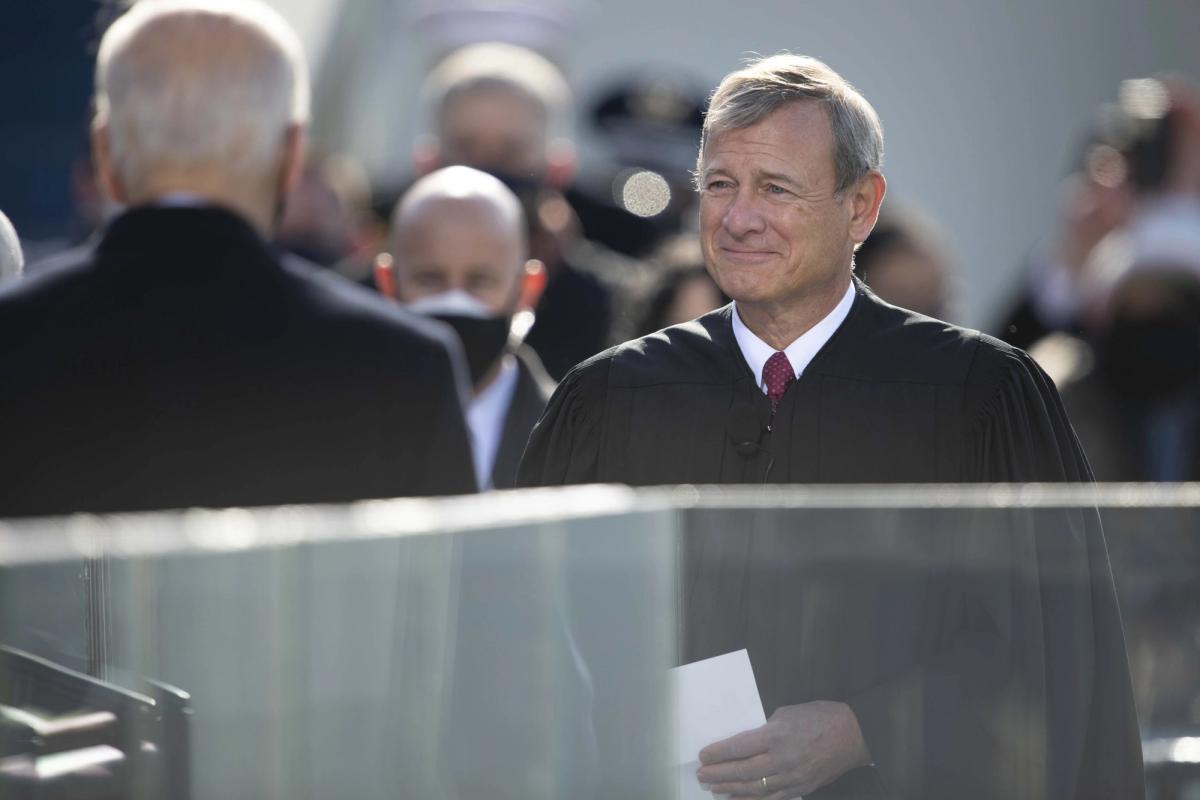
# Chief Justice Roberts' Emerging Centrist Position on the Supreme Court
Chief Justice John G. Roberts Jr. has positioned himself as a moderating force on the Supreme Court, a shift that reflects deepening ideological divisions within the institution. Recent opinions and voting patterns reveal Roberts seeking middle ground on contentious constitutional questions, particularly those touching voting rights, campaign finance, and separation of powers.
Roberts' approach contrasts sharply with the Court's current 6-3 conservative supermajority. While aligned with the Court's rightward trajectory on major cases, he has occasionally joined more measured opinions or concurrences that avoid sweeping constitutional declarations. His leadership from the Chief Justice chair emphasizes institutional stability and public confidence in the judiciary.
The Chief Justice faces pressure from competing directions. Conservative colleagues push for aggressive jurisprudence dismantling decades of precedent. Liberal justices seek to preserve established doctrine. Roberts must maintain the Court's legitimacy while steering the conservative majority away from positions that invite public backlash or congressional retaliation.
His management style reflects lessons learned from Obamacare litigation. In National Federation of Independent Business v. Sebelius (2012), Roberts drew criticism from conservatives for saving the Affordable Care Act by reinterpreting the individual mandate as a tax. That decision taught him that sweeping rulings generate political pressure that threatens judicial independence.
Recent term voting demonstrates this tension. Roberts has shown willingness to join conservative victories without demanding the most extreme rationale. Yet he has resisted joining opinions containing language suggesting the Court will overturn additional precedents or expand holdings beyond immediate facts.
This moderate positioning carries risks. It frustrates conservative justices demanding more aggressive action on gun rights, religious liberty, and executive power. It disappoints liberal justices seeking protection for abortion access and voting safeguards. Roberts cannot satisfy both camps simultaneously.
The Chief Justice's authority derives from his