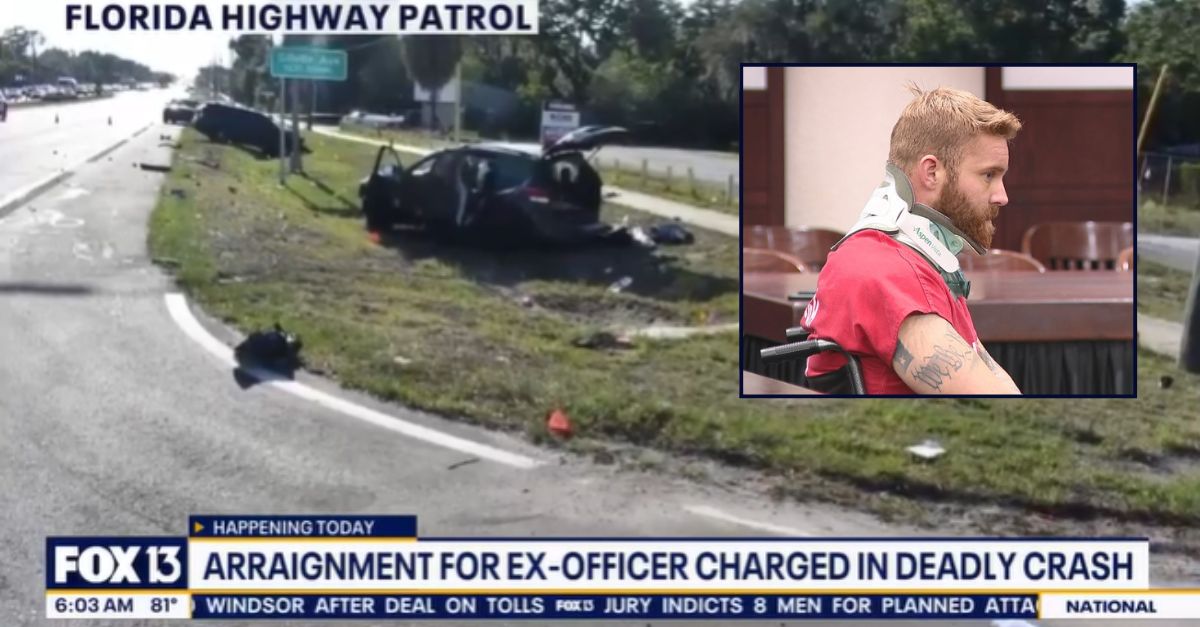
A Florida police officer allegedly drove 104 mph in a 50 mph zone while rushing to work and struck a vehicle carrying an Uber Eats delivery driver and three children, resulting in the death of a 6-year-old girl.
The collision killed the child and injured the driver and other passengers. Law enforcement officials reported that the officer exceeded the speed limit by more than double, traveling at roughly twice the posted limit before impact.
The incident raises serious questions about police accountability and criminal liability. Officers who cause fatal accidents while engaging in reckless conduct face potential charges ranging from vehicular manslaughter to criminally negligent homicide, depending on Florida's specific statutes and the circumstances surrounding the crash.
Under Florida law, a person commits vehicular manslaughter if they operate a motor vehicle in a reckless manner and cause the death of another person. Recklessness requires conscious disregard for the safety of others. Driving 104 mph in a 50 mph zone to arrive at work on time presents a compelling factual basis for such charges.
The officer's conduct also exposes the police department to significant civil liability. The delivery driver and surviving family members can pursue wrongful death and personal injury claims against both the officer and the department. Municipalities often hold vicarious liability for employee misconduct, particularly when the conduct is flagrant and unauthorized.
Police agencies typically implement policies governing emergency driving and speed limits. Operating a personal vehicle at extreme speeds without authorized emergency lights or sirens generally violates departmental regulations. This violation strengthens civil claims and may support criminal prosecution.
The case illustrates the application of traffic laws to law enforcement personnel. While some jurisdictions grant limited exemptions for officers responding to emergencies, driving recklessly to arrive at a scheduled shift does not qualify as emergency response. The officer receives no special exemption under these facts.
Survivors and the victim's