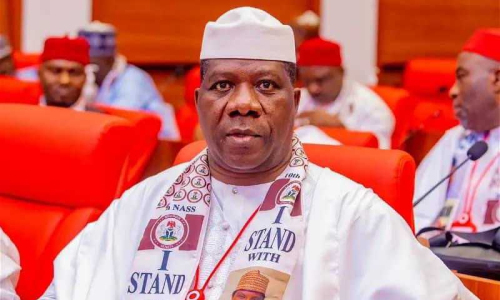
Nigeria's Senate defended its passage of the Constitution of the Federal Republic of Nigeria (Alteration) (State Police) Bill, 2026, rejecting accusations that the constitutional amendment serves partisan political goals. The Senate's Directorate of Media and Public Affairs issued a statement characterizing the reform as driven by national security imperatives rather than political calculation.
The bill proposes a constitutional amendment that would establish state-level police forces alongside the existing federal police apparatus. Currently, Nigeria's policing remains centralized under federal control through the Nigeria Police Force. The proposed decentralization aims to enable state governments to deploy law enforcement resources tailored to local security conditions.
The Senate framed the initiative within Nigeria's ongoing battle against insurgency, banditry, and communal conflict. The statement emphasizes that fragmented security threats across Nigeria's 36 states and Federal Capital Territory demand localized police responses. Proponents argue that state police forces would reduce response times and allow governors to address region-specific security priorities without federal approval delays.
Critics, however, have raised concerns about constitutional implications and political abuse potential. Opponents worry that state-controlled police forces could be weaponized against political opponents or used to suppress dissent within state jurisdictions. They cite examples from Nigeria's history where security forces have served political rather than public safety functions.
The constitutional amendment process in Nigeria requires passage by both chambers of the National Assembly followed by ratification by at least 24 of 36 state houses of assembly. The bill has cleared the Senate, but faces the ratification hurdle before implementation.
Legal scholars debate whether state police forces comply with the 1999 Constitution as amended. The existing framework vests police authority in the federal government under Schedule 4 of the Constitution. Amending this distribution of power requires the formal constitutional amendment process the Senate initiated.
The Senate's defense signals determination to proceed despite opposition. Implementation would represent Nigeria