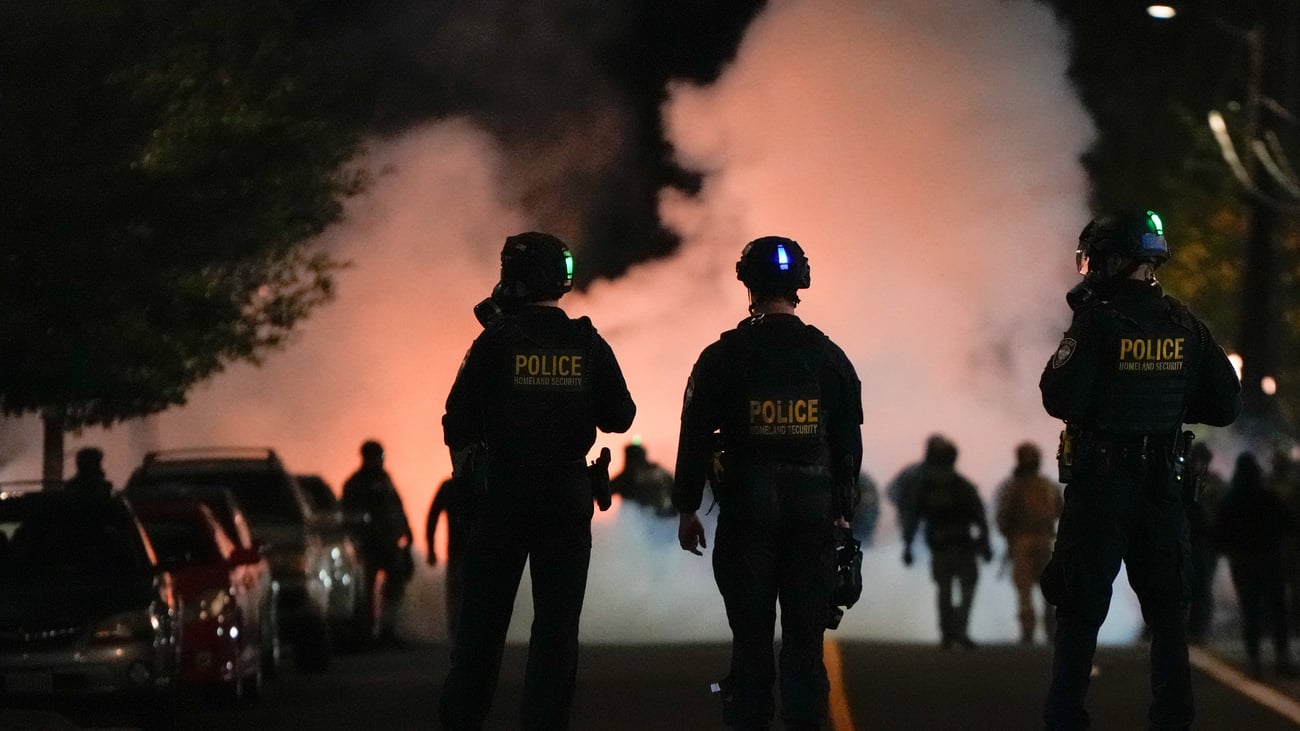
The U.S. Department of Justice asked the Ninth Circuit Court of Appeals to maintain its current ruling permitting federal agents to deploy tear gas and other chemical munitions outside the Immigration and Customs Enforcement facility in Portland, Oregon.
A district court had issued two preliminary injunctions blocking the use of these chemical agents at the location. The Ninth Circuit subsequently stayed both injunctions, effectively allowing federal law enforcement to continue deploying tear gas and similar munitions outside the facility.
The DOJ's request asks the appellate court to preserve the status quo, keeping the stays in place. This position reflects the federal government's argument that tear gas use serves legitimate law enforcement purposes during demonstrations and potential security threats at the ICE facility.
The litigation centers on whether tear gas and chemical munitions constitute excessive force or violate constitutional protections, likely implicating First Amendment rights and Fourth Amendment protections against unreasonable force. District courts have increasingly scrutinized federal agencies' use of such weapons during protests and civil unrest, finding in some cases that their deployment exceeds constitutional bounds.
The Ninth Circuit's decision to stay the preliminary injunctions created a temporary reprieve for federal agents but did not resolve the underlying legal questions. The court will ultimately determine whether the lower court's injunctions should stand, be reversed, or be modified.
Portland has been a flashpoint for federal law enforcement tactics since 2020, with numerous disputes over appropriate police responses to protests. This case adds to a growing body of litigation examining the scope of federal power to use chemical weapons in civilian contexts and whether such use complies with constitutional constraints on excessive force and free speech protections.