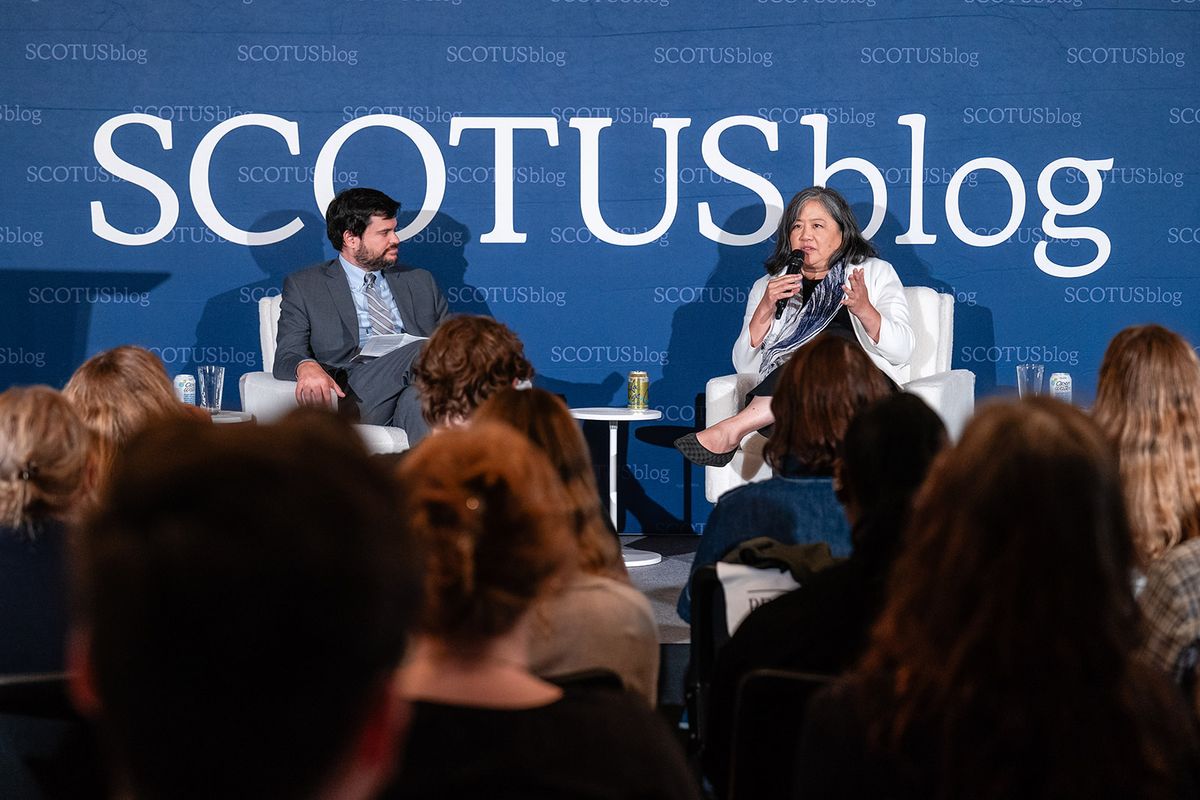
Cecillia Wang, National Legal Director of the American Civil Liberties Union, addressed key developments from the Supreme Court's recent term at SCOTUSblog's term-in-review event. Wang focused on the ACLU's involvement in birthright citizenship litigation and broader implications for civil rights advocacy.
Birthright citizenship, governed by the Fourteenth Amendment's citizenship clause, determines automatic citizenship for persons born on U.S. soil. The ACLU has positioned itself centrally in cases challenging or defending this doctrine. Wang's remarks reflected the organization's legal strategy as courts examine whether Congress possesses authority to limit birthright citizenship through statute, a question with profound consequences for immigration policy and constitutional interpretation.
Wang contextualized the ACLU's work within the broader term landscape, discussing how the Court's decisions affected civil liberties across multiple domains. She outlined the organization's litigation priorities moving forward, signaling where the ACLU will deploy resources in upcoming cases.
The ACLU's involvement in birthright citizenship cases represents high-stakes constitutional advocacy. Any judicial narrowing of automatic citizenship rights would reshape eligibility for approximately 750,000 children born annually in the United States. The litigation directly implicates statutory interpretation of the citizenship clause and historical congressional intent regarding the Fourteenth Amendment's passage and ratification.
Wang's appearance at the SCOTUSblog event served dual purposes. First, it provided transparency into the ACLU's legal positioning on issues decided or pending before the Court. Second, it signaled the organization's commitment to continued Supreme Court engagement as the docket develops.
The ACLU's civil rights docket extends beyond birthright citizenship into voting rights, criminal justice reform, LGBTQ equality, and religious freedom matters. Wang's remarks likely connected specific term outcomes to the organization's broader constitutional vision and identified which decisions enhanced or constrained advocacy opportunities in coming years.