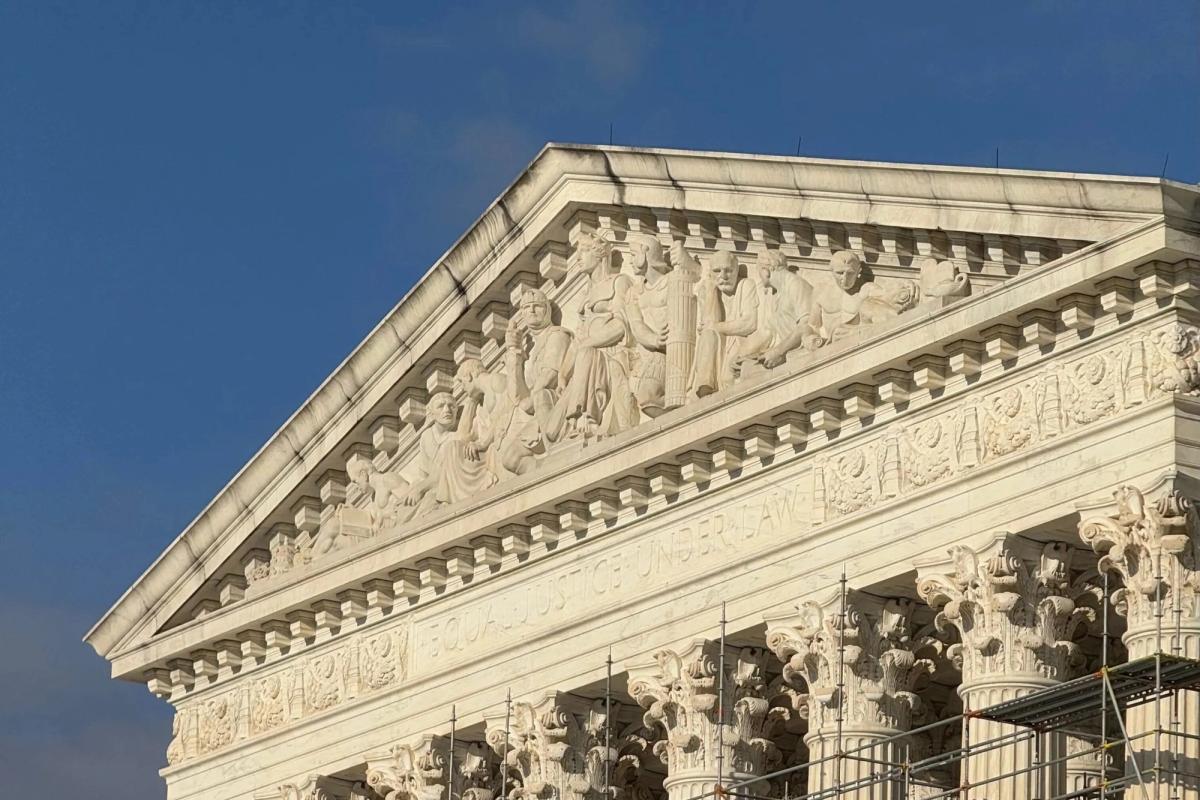
President Trump has petitioned the Supreme Court to rehear its decision on birthright citizenship, challenging the constitutional guarantee of citizenship to children born on U.S. soil. The request follows Trump's unsuccessful initial effort to overturn the longstanding interpretation of the Fourteenth Amendment's citizenship clause.
Trump's motion targets the Court's existing precedent, established in United States v. Wong Kim Ark (1898), which held that children born in the United States to non-citizen parents automatically acquire citizenship. The President argues the Court should reconsider this doctrine, contending the Fourteenth Amendment does not extend citizenship to children of illegal immigrants or those on temporary visas.
A rehearing petition requires four justices to vote in favor, a threshold historically difficult to meet. The Supreme Court seldom grants rehearings, typically reserving them for cases involving procedural errors or newly discovered evidence rather than mere disagreement with judicial interpretation.
The legal significance centers on the scope of the Fourteenth Amendment, ratified in 1868, which states: "All persons born or naturalized in the United States, and subject to the jurisdiction thereof, are citizens of the United States." Courts have consistently interpreted "subject to the jurisdiction thereof" to apply to virtually all persons born within U.S. borders, with narrow exceptions for foreign diplomats' children.
Trump's challenge carries substantial practical implications. If successful, it would upend birthright citizenship protections for millions of Americans and alter immigration enforcement nationwide. States could face litigation regarding vital records, educational access, and citizenship status determinations. Businesses relying on employment eligibility verification systems would confront new legal uncertainties.
Legal analysts view the rehearing petition as a longshot. The Supreme Court's ideological composition, despite conservative gains, has shown reluctance to overturn century-old citizenship doctrine without compelling new legal reasoning. Justice Amy Coney Barrett has not previously signaled openness to