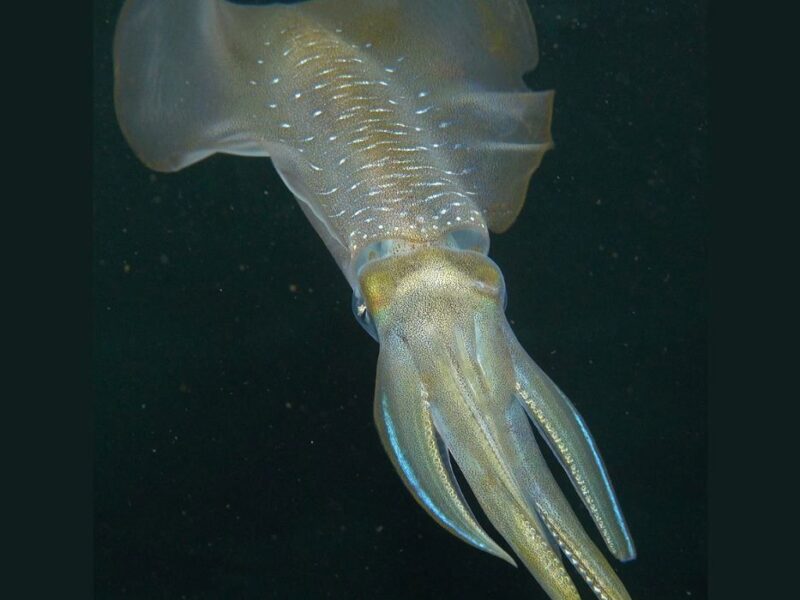
Researchers from Taiwan and Canada discovered that ocean acidification significantly reduces brain size in squid, threatening cognitive function in these intelligent cephalopods. The study examined how rising ocean pH levels affect squid development and neural structures.
Ocean acidification occurs when seawater absorbs carbon dioxide from the atmosphere, lowering pH and creating carbonic acid. This process alters marine chemistry and stresses aquatic organisms. The research team exposed squid larvae to acidified water conditions projected for future oceans and measured resulting physiological changes.
The findings show that elevated acidity triggers developmental abnormalities in squid brains, with larvae exposed to acidified conditions developing noticeably smaller neural structures compared to control groups raised in normal seawater. Smaller brains correlate with reduced cognitive abilities, including impaired learning, memory formation, and problem-solving capacity. These deficits directly impact survival prospects in competitive ocean environments where intelligence provides hunting advantages and predator avoidance.
Squid rely on sophisticated neural networks for complex behaviors. Their brains enable rapid color-changing camouflage, coordinated tentacle movements, and strategic hunting tactics. Brain shrinkage compromises these adaptive capabilities, making affected populations more vulnerable to predation and environmental challenges.
The research has broad ecological implications. Squid occupy central positions in marine food webs, serving as prey for large fish and marine mammals while hunting smaller organisms. Population declines from acidification-induced cognitive impairment could destabilize fisheries and ocean ecosystems. Commercial squid fishing represents a multibillion-dollar global industry, particularly in Asia and the Mediterranean.
The study contributes to growing evidence that ocean acidification poses systemic threats beyond simple pH changes. Previous research documented acidification's impact on fish hearing, shell development in mollusks, and behavioral changes across marine species. This squid research adds neural function to the documented harms.
Climate