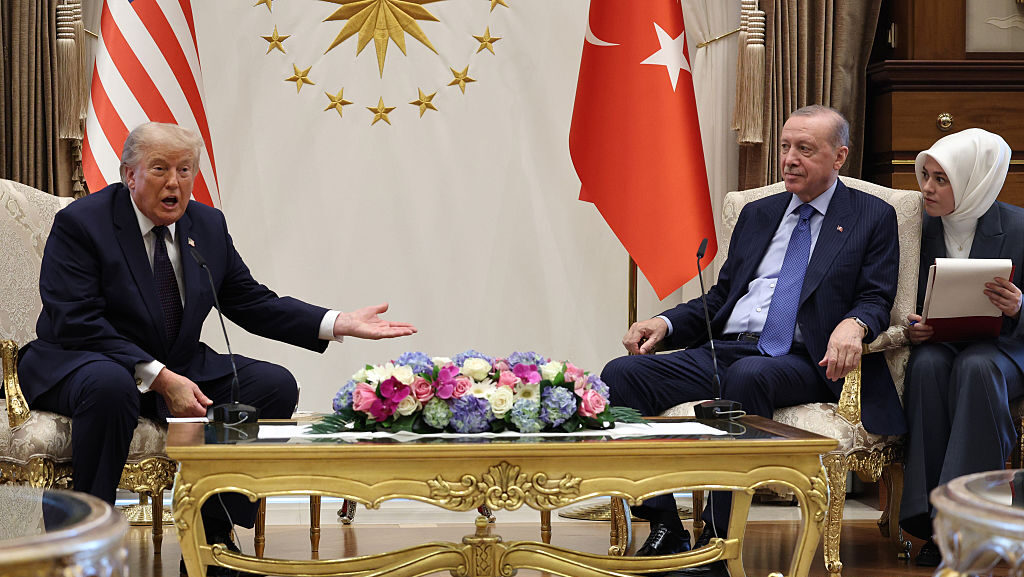
President Trump signaled openness to reversing the U.S. ban on F-35 fighter jet sales to Turkey and lifting sanctions against the NATO ally. Trump stated "We're going to be taking the sanctions off. It's time to do that. Ok? We don't want to sanction friends. It's very simple."
The U.S. removed Turkey from the F-35 program in 2019 after Ankara purchased the Russian S-400 air defense system, which the Pentagon deemed incompatible with NATO interoperability standards and a security risk to the advanced stealth fighter's technology. Congress subsequently enacted sanctions under the Countering America's Adversaries Through Sanctions Act (CAATSA) in response to the Russian weapons acquisition.
Turkey's exclusion from the F-35 Joint Strike Fighter program represents one of the most significant defense partnership ruptures within NATO. The sanctions framework restricts defense sales and financial transactions with Turkish entities. Reversing the ban would require Trump administration action on the executive side, though certain CAATSA provisions may require congressional approval depending on their statutory structure.
Restoring F-35 access carries substantial geopolitical implications. It signals normalization of U.S.-Turkey relations after years of tension over Russia weapons purchases and Syria policy. For defense contractors, notably Lockheed Martin, which manufactures the F-35, renewed Turkish participation would open a multi-billion dollar market. Turkey's reinstatement could also restore burden-sharing within NATO's advanced weapons ecosystem.
However, defense hawks in Congress and Pentagon officials have historically opposed reintegrating Turkey into the program without addressing underlying security concerns. The S-400 system remains in Turkish inventory, and intelligence officials have warned of potential compromise risks to the F-35's classified systems.
Trump's remarks represent preliminary positioning rather than formal policy reversal. Any actual sanctions lift or program reinstat