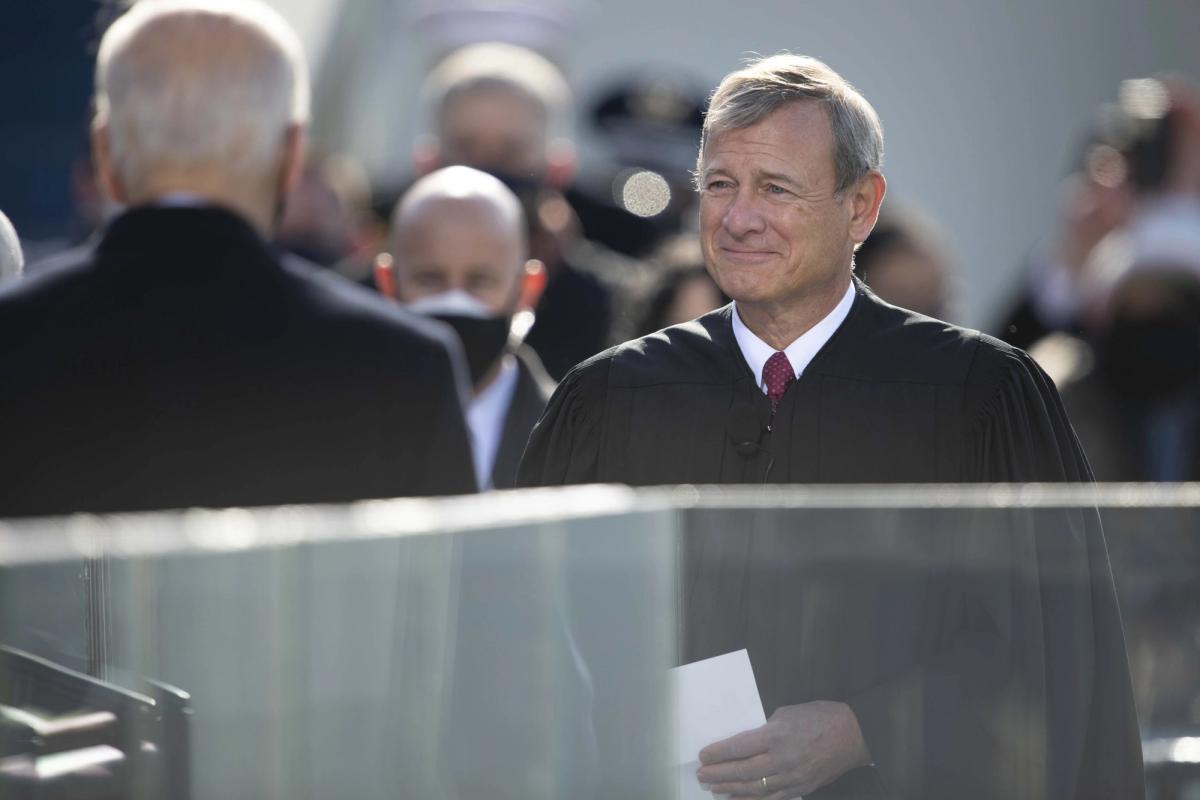
Chief Justice John G. Roberts Jr. has positioned himself as a moderating force within the Supreme Court through strategic opinion assignments and narrower holdings, a pattern visible across recent Terms, according to legal scholars and court observers.
Roberts controls the majority in cases where he votes with the majority, granting him substantial power over opinion assignment. He has increasingly used this authority to craft narrower rulings that limit sweeping constitutional pronouncements. This approach appeared evident in cases involving voting rights, affirmative action, and religious liberty, where the Chief Justice worked to narrow grounds for decision rather than expand them.
The strategy reflects Roberts' institutional concerns about the Court's legitimacy and public perception. In his 2020 book "Scorpions," author John A. Grisham suggested institutional preservation remains central to Roberts' jurisprudence. When Roberts sided with liberal justices in the Affordable Care Act cases of 2012 and 2015, his votes prioritized the Court's reputation over ideological outcomes.
Recent Terms show mixed results. In cases where Roberts controls the majority, he has successfully pursued narrower holdings. However, in cases where he finds himself in dissent or without assignment authority, the conservative supermajority has proceeded with broader rulings. The 6-3 conservative majority has limited his gatekeeping function in some contexts.
Legal analysts observe that Roberts' approach reflects tension between his institutional vision and the Court's ideological composition. Justice Clarence Thomas and others on the Court's right wing have rejected his moderating instincts, pursuing more expansive constitutional theories.
The Chief Justice's record suggests he views his role as extending beyond case resolution to encompassing the Court's standing in American governance. His voting record demonstrates willingness to sacrifice conservative wins for rulings that preserve institutional credibility. Whether this moderating force can persist within a 6-3 conservative Court remains contested among legal observers.