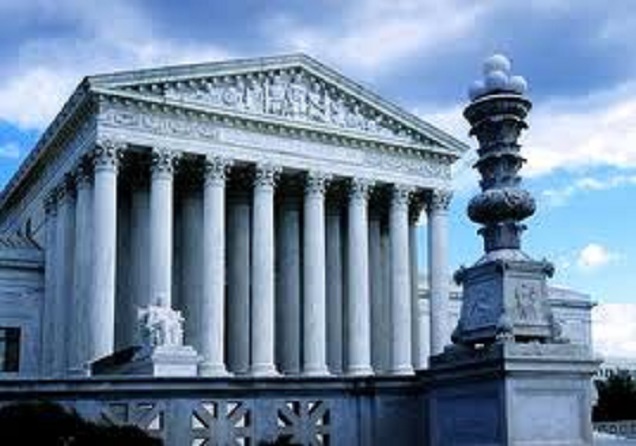
A congressional member has pressed Chief Justice John Roberts to address whether Supreme Court justices can place wagers on prediction markets tied to cases before the Court. The letter seeks immediate clarification on ethics rules governing such betting activity.
Prediction markets allow users to wager on outcomes of major events, including Supreme Court decisions. These platforms operate through digital means accessible via smartphone, creating a theoretical scenario where sitting justices could bet on cases they will decide. The congressional inquiry reflects concern that justices lack explicit ethical prohibitions against such conduct.
The Supreme Court has no formal ethics code binding justices. Instead, each justice follows a voluntary ethics guide that lacks enforcement mechanisms. This gap creates ambiguity about whether justices can legally participate in prediction markets wagering on cases assigned to their dockets.
The letter urges Roberts to establish clear rules preemptively rather than react after a scandal emerges. Congress has grown frustrated with the Court's self-regulatory approach following previous ethics controversies involving individual justices. The legislative branch views this moment as an opportunity for the Court to demonstrate institutional commitment to ethics reform.
Prediction markets have surged in popularity and sophistication. Platforms now operate globally and handle substantial wagering volumes on political outcomes. The accessibility of these markets raises the prospect that justices could participate anonymously or through intermediaries, creating both appearance and actual conflicts of interest.
The ethical stakes are substantial. A justice betting on a case before the Court presents an obvious conflict between the financial incentive to rule a particular way and the duty to decide impartially. Even if no justice has actually placed such bets, the absence of explicit prohibition creates reputational risk for the institution.
The congressional push signals that reform may come from outside the Court if internal action stalls. Without rules from Roberts or the full Court, Congress could consider legislation imposing ethics standards on federal judges. Such intervention would represent unusual friction between branches of government over judicial conduct.