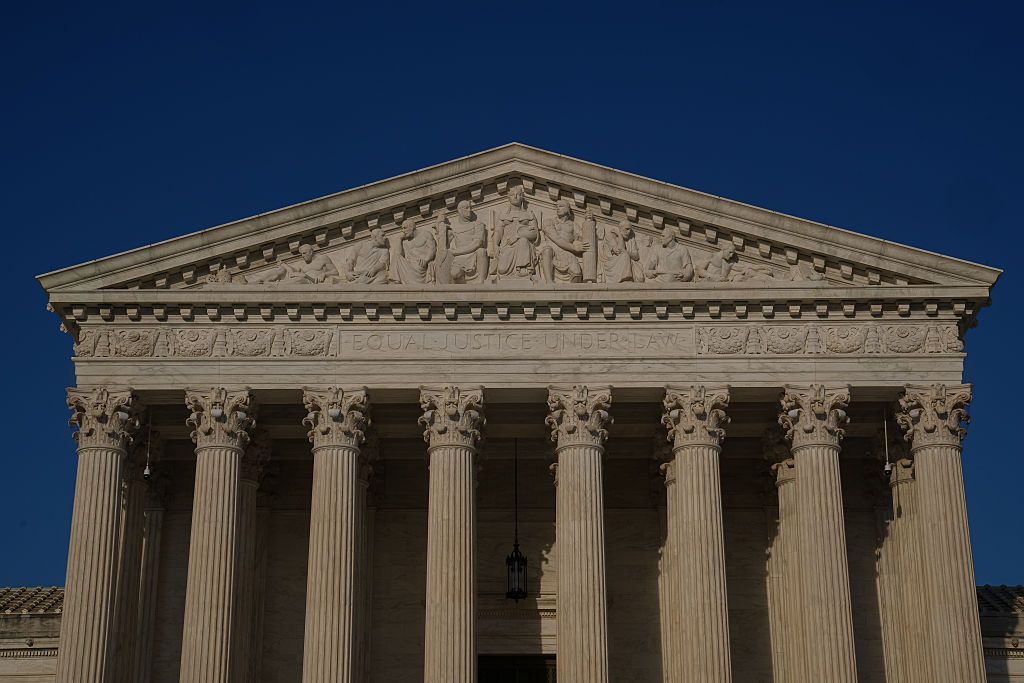
# Is the Roberts Court Hyperopic or Willfully Blind?
Chief Justice John Roberts and his colleagues face mounting criticism over their refusal to address the practical consequences of recent landmark decisions. Legal scholars and practitioners argue that the Court's rulings, while theoretically sound, create chaotic real-world implementation problems that the justices appear unwilling to confront.
The tension surfaced most acutely following the Court's 2022 decision in Dobbs v. Jackson Women's Health Organization, which eliminated the federal constitutional right to abortion and returned authority to the states. Lower courts have since struggled to apply the decision across vastly different state regulatory schemes, creating conflicting interpretations. The Supreme Court has declined to grant certiorari on numerous cases seeking clarification, leaving confusion in its wake.
Similar patterns emerged after Students for Fair Admissions v. Harvard, which struck down race-conscious college admissions. Universities scrambled to comply with an opinion that articulated principles but left critical questions unanswered about permissible consideration of individual circumstances and historical context. The Court again declined opportunities to provide guidance.
Legal commentators describe this approach as either hyperopia, a vision condition where distant objects appear clear while nearby objects blur, or deliberate avoidance. Either way, the result frustrates litigants, lower court judges, and institutions trying to implement constitutional law in practice.
The observation reflects deeper concerns about judicial restraint doctrine. The Roberts Court typically emphasizes narrow holdings and declines to address questions the justices deem unnecessary to the immediate case outcome. This philosophy preserves institutional credibility and judicial independence but sacrifices clarity when one decision cascades into dozens of conflicting lower court interpretations.
Some justices appear more sympathetic to this criticism than others. Justice Elena Kagan has previously signaled frustration with the Court's refusal to clarify ambiguous holdings, though her dissenting voice