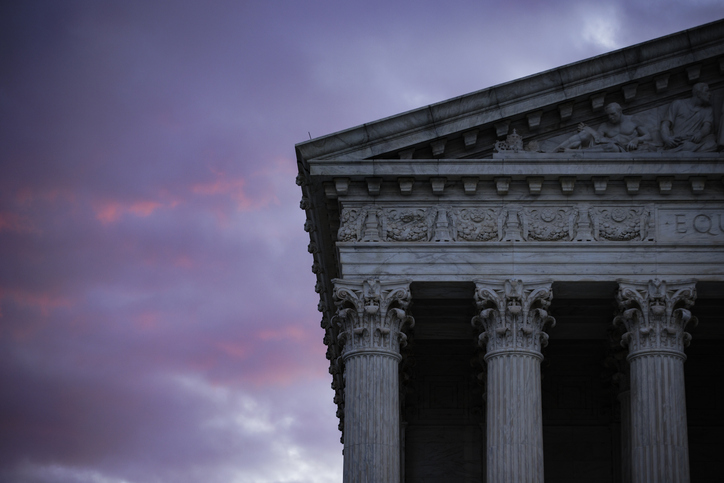
A new poll reveals that nearly half of Republicans support imposing stronger institutional controls on the Supreme Court, signaling broad bipartisan concern about the high court's power and independence. The survey data demonstrates that public confidence in the Court has eroded across the political spectrum, with even traditionally conservative voters questioning whether adequate checks exist on judicial authority.
The polling findings reflect mounting frustration with the Supreme Court's recent decisions and operational practices. Republicans have historically defended the Court as an independent branch resistant to political pressure, but this poll indicates that stance is weakening among rank-and-file GOP voters. The shift suggests the Court's legitimacy crisis extends beyond progressive critics who oppose conservative rulings on abortion, voting rights, and other divisive issues.
The Supreme Court faces structural vulnerabilities that fuel these concerns. Unlike the Executive and Legislative branches, the Court operates with minimal external oversight mechanisms. Justices face no term limits, no mandatory retirement age, and no ethics enforcement structure comparable to that governing lower federal judges. The institution sets its own rules for recusal decisions, financial disclosures, and conflict-of-interest matters.
Recent controversies have amplified public scrutiny. The leak of Justice Samuel Alito's draft opinion in Dobbs v. Jackson Women's Health Organization in 2022 raised questions about internal governance. Reporting on Justice Clarence Thomas's undisclosed luxury vacations and gifts from Republican benefactors sparked ethics debates. Concerns about Justice Ketanji Brown Jackson's recusal decisions in affirmative action cases generated partisan criticism.
This polling data provides ammunition for reform advocates pushing court-packing proposals, term-limit amendments, expanded ethics rules, and mandatory recusal standards. Congress possesses constitutional authority to adjust the Court's size, jurisdiction, and procedural rules, though fundamental reforms would face intense political obstacles.
The Court's own behavior has damaged its reputation more than external critics have. Justices