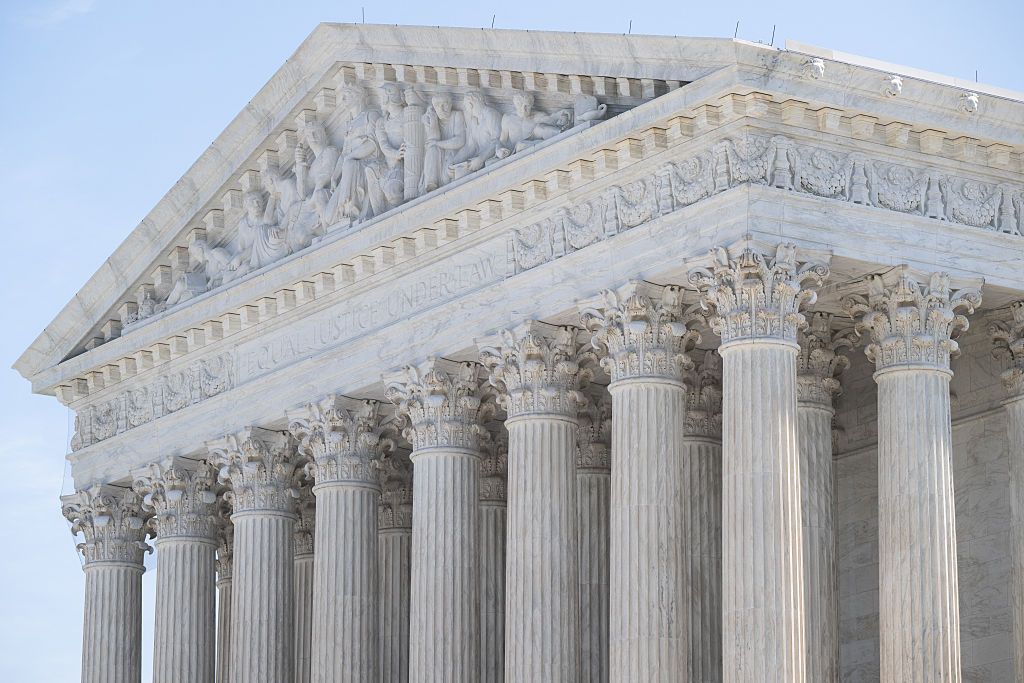
# Supreme Court Strikes Down Trump's Order on Birthright Citizenship
The Supreme Court invalidated an executive order issued by President Trump that sought to end birthright citizenship for children born to noncitizen parents in the United States. The court ruled that the order violated the Fourteenth Amendment, which explicitly grants citizenship to all persons born in the United States and subject to its jurisdiction.
The case centered on the constitutional text of the Fourteenth Amendment, Section 1, adopted in 1868. That provision states: "All persons born or naturalized in the United States, and subject to the jurisdiction thereof, are citizens of the United States and of the State wherein they reside." The Supreme Court held that this language unambiguously confers automatic citizenship on persons born within U.S. borders, regardless of their parents' immigration status.
Trump's order attempted to reinterpret the "subject to the jurisdiction thereof" clause to exclude children of undocumented immigrants. The administration argued that noncitizen parents fell outside the jurisdiction clause and thus their children did not automatically gain citizenship. The Supreme Court rejected this narrow reading, finding it inconsistent with 150 years of constitutional interpretation and congressional understanding following the Fourteenth Amendment's ratification.
The decision reaffirms that birthright citizenship remains a foundational principle of American law. Approximately 350,000 children born annually to at least one undocumented parent in the United States retain automatic citizenship under this ruling.
Lower courts had previously blocked enforcement of Trump's order through preliminary injunctions. The Supreme Court's decision makes those injunctions permanent and bars future attempts to restrict birthright citizenship through executive action without constitutional amendment.
The ruling carries profound implications for immigration policy and identity law. Any statutory or regulatory change to birthright citizenship would require either a constitutional amendment or a complete judicial reversal of this precedent, an unlikely scenario given the Four