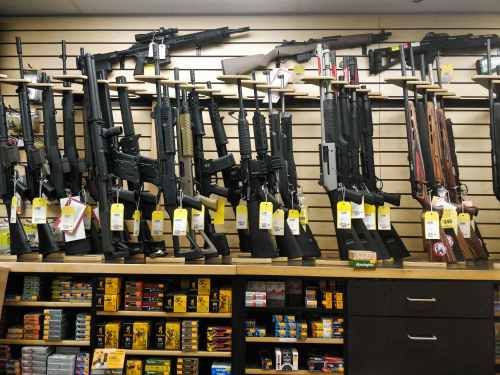
The Supreme Court granted certiorari in multiple cases on Monday, including a Second Amendment challenge that will test whether the Constitution protects the right to possess semiautomatic rifles.
The Court accepted the case arising from a New York law that effectively bans semiautomatic rifles by imposing strict licensing requirements that make legal possession nearly impossible. A lower court upheld the state regulation under intermediate scrutiny review. The petitioner argues that semiautomatic rifles are in common use for lawful purposes like self-defense and hunting, bringing them within the scope of protection established in District of Columbia v. Heller (2008), which recognized an individual right to keep functional firearms.
This case carries enormous practical implications. New York joins California, Connecticut, and other states with similar restrictions. A Supreme Court ruling striking down these bans could invalidate comparable semiautomatic weapons regulations nationwide. Conversely, an affirmance would strengthen state authority to regulate these weapons despite previous Second Amendment precedent.
The decision arrives six years after New York State Rifle and Pistol Association v. Bruen (2022), when the Court established a new framework requiring governments to justify firearm restrictions through historical tradition and text-based originalism. That decision already invalidated New York's concealed carry licensing law. The current case tests how Bruen applies to modern semiautomatic weapons absent extensive historical analogues.
The Court also granted cases on other constitutional questions, maintaining its active docket heading into the new term. The Second Amendment case represents the first major gun rights question the Court has accepted since Bruen, signaling the justices view the issue as unresolved under the current standard.
Gun control advocates warn that a favorable ruling for petitioners would eliminate a primary regulatory tool states use to reduce mass shootings. Gun rights organizations argue that constitutional protections cannot depend on a weapon's design or popularity in commerce.
Oral