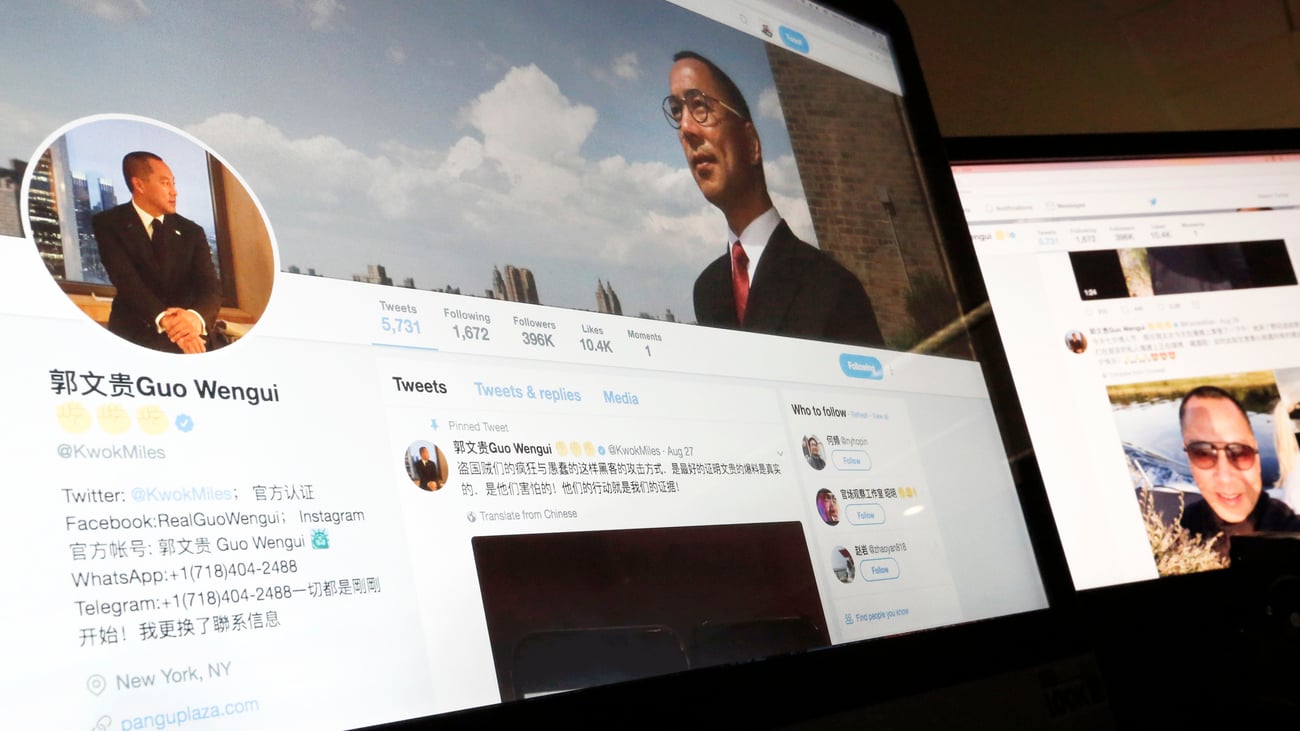
Miles Guo, a Chinese billionaire and dissident who fled China for the United States, received a 30-year federal prison sentence following conviction on fraud and money laundering charges. The U.S. District Court imposed the lengthy term based on schemes Guo orchestrated targeting Chinese nationals and political allies.
Federal prosecutors established that Guo defrauded investors through multiple ventures, including a cryptocurrency project and real estate deals marketed to supporters of his anti-communist political movement. Court filings documented that Guo raised hundreds of millions of dollars through false promises while concealing the actual use of investor funds for personal expenses and political activities.
The sentencing reflects the gravity prosecutors assigned to Guo's conduct. The defendant operated international financial networks that moved illicit proceeds across borders, prosecutors argued, exploiting his political platform to lure victims. Guo maintained his innocence throughout the trial, characterizing the prosecution as political persecution by the Chinese government through American judicial channels.
Guo's case carries broader implications for how U.S. courts treat foreign political figures and dissidents accused of financial crimes. His legal team argued that his prominence as a critic of Beijing made him a target for politically motivated prosecution. Federal judges, however, found the evidence of fraud and money laundering sufficient to support convictions independent of Guo's political activities.
The 30-year sentence substantially exceeds typical federal white-collar crime punishments, underscoring judicial assessment of the scale and sophistication of Guo's schemes. The ruling affects other defendants facing similar charges of international fraud spanning multiple investment vehicles.
Notably, Guo's penthouse apartment in Manhattan caught fire in March 2023 shortly after his arrest, with federal investigators present during the blaze. The cause remains undetermined, though the timing raised questions about evidence preservation and investigative continuity.
Guo retains appellate options, and