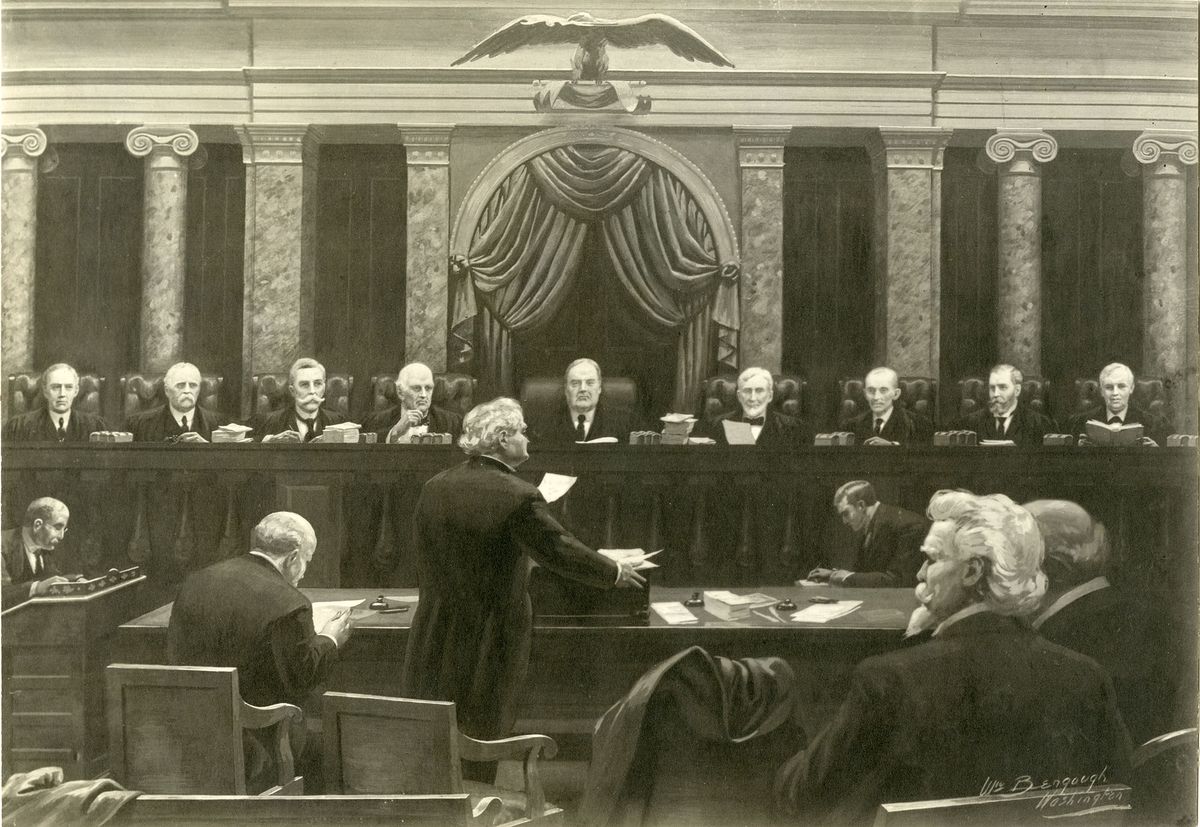
# Supreme Court Justices Increasingly Cross Into Political Territory
The U.S. Supreme Court justices have begun inserting themselves directly into political debates, blurring longstanding boundaries between the judiciary and partisan politics. This trend reflects deeper fractures within the Court and raises questions about judicial legitimacy and public perception.
Justices now regularly engage in political commentary through written opinions, public speeches, and media appearances. Justice Samuel Alito has defended the Court's abortion decision publicly. Justice Elena Kagan has criticized the Court's direction. Chief Justice John Roberts expressed concern about the Court's public standing. These interventions extend beyond traditional judicial exposition of legal reasoning into territory courts have historically avoided.
The Court's recent decisions themselves have drawn accusations of partisanship. The 6-3 conservative majority has delivered victories on voting rights restrictions, gun rights expansion, and religious liberty claims that align with Republican policy preferences. The liberal minority has dissented sharply, with justices warning that the Court has abandoned neutral judging.
Social media amplifies these tensions. Justices tweet and grant interviews. Clerks and their networks discuss cases publicly before decisions emerge. The boundary between judicial impartiality and political engagement has become permeable. Outside groups now explicitly lobby individual justices, and justices accept speaking invitations from organizations with transparent political agendas.
This shift carries real consequences. Public trust in the Court has declined. Voters increasingly view the judiciary as just another political body rather than an apolitical interpreter of law. Congress faces pressure to expand the Court or impose term limits. Businesses cannot rely on consistent, neutral rulings when justices appear motivated by ideology rather than law.
The core problem: when justices become political actors, they surrender the institutional authority that makes their decisions binding. A court perceived as partisan loses the legitimacy necessary to resolve America's hardest disputes. The justices inherited an institution built on