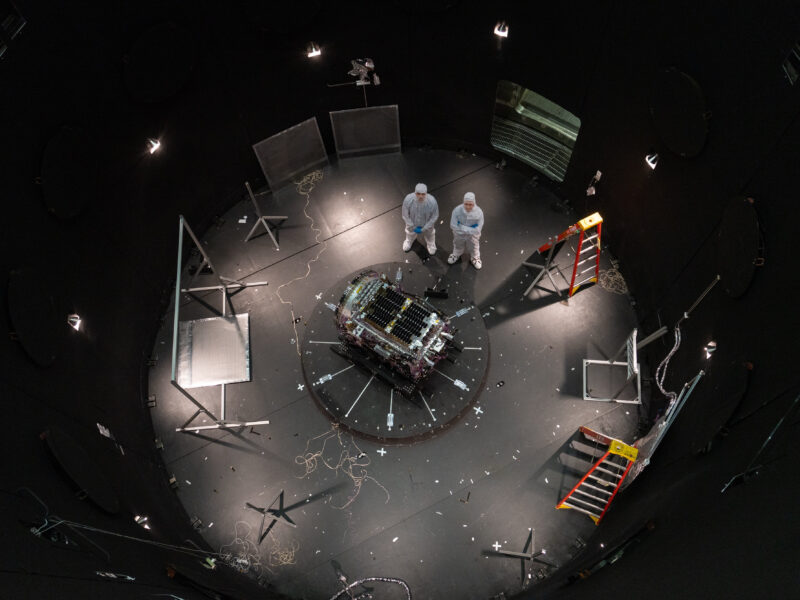
NASA initiates an emergency salvage operation to prevent the Swift gamma-ray burst observatory from plummeting to Earth. The space agency plans to launch a robotic spacecraft as early as this week to execute the $30 million rescue mission.
The Swift telescope, which has operated since 2004, faces deorbiting due to atmospheric drag and fuel depletion. Without intervention, the satellite will re-enter Earth's atmosphere within months, creating debris hazards and potential ground impact risks. NASA selected a robotic servicing spacecraft to rendezvous with Swift and either reboost the satellite to a higher orbit or perform a controlled deorbit into an unpopulated ocean region.
This marks the first attempt to rescue a functional satellite from imminent decay using autonomous robotic technology. The operation requires precision maneuvering to dock with Swift, a 51-foot spacecraft originally designed without servicing capabilities. Engineers must navigate technical constraints that include limited communication windows and the satellite's current orbital degradation trajectory.
The rescue effort reflects NASA's shift toward active debris management and satellite servicing. Successfully extending Swift's operational life preserves decades of gamma-ray burst research and avoids expensive replacement missions. The mission also demonstrates capabilities for future satellite rescues and orbital infrastructure maintenance.
If the robotic servicing succeeds, Swift could continue observations for several additional years. The alternative—allowing uncontrolled re-entry—poses risks to populated areas despite statistical probability favoring ocean impact. Controlled deorbit remains the secondary option if rescue fails.
The operation carries technical risks inherent to robotic rendezvous at orbital speeds exceeding 17,500 miles per hour. Any miscalculation during docking could damage Swift or the servicing spacecraft. Mission controllers have prepared contingency protocols for thruster failures and communication breakdowns during the critical approach phase.
Success depends on autonomous systems performing flawlessly in the harsh