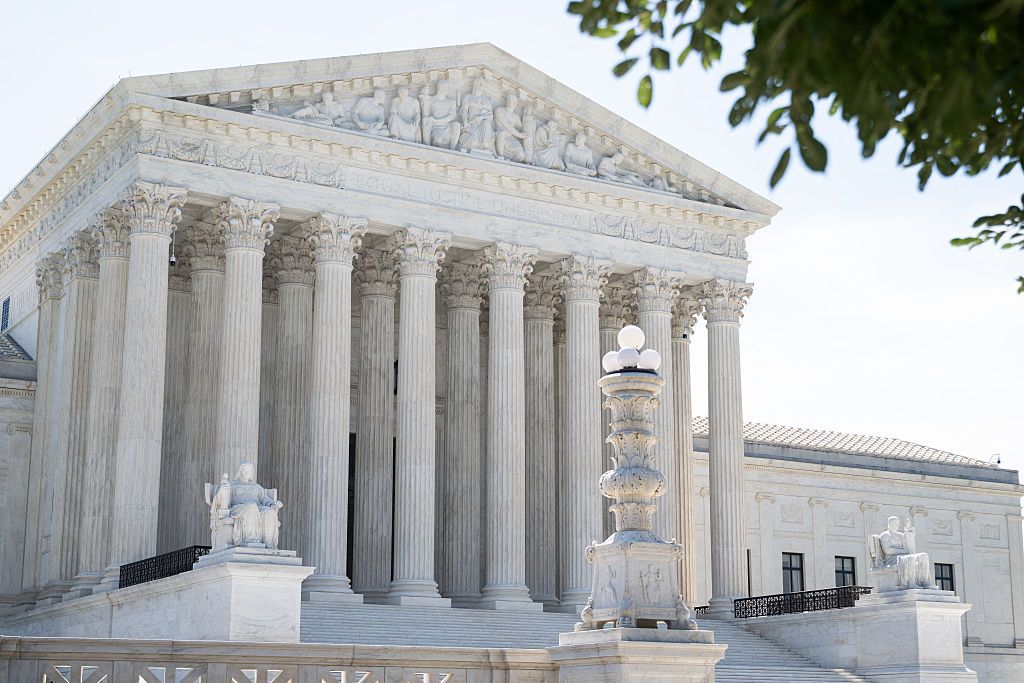
The Supreme Court declined to block a Pennsylvania state law that permits election officials to count mail-in ballots that arrive up to three days after Election Day, provided they are postmarked by Election Day itself. The decision leaves intact Pennsylvania's procedures for handling late-arriving mail-in ballots in future elections.
Pennsylvania's mail-in voting statute allows ballots received through November 8, 2024, three days after the general election, to count if properly postmarked by November 5. Republican challengers, including the Republican National Committee and other party officials, sought emergency relief to block this practice before the November 2024 election, arguing the state law violated federal election law and the Constitution.
The justices rejected the emergency application without full briefing or oral argument. This action reflects the Court's reluctance to intervene in election procedures on an expedited basis absent exceptional circumstances. The Republicans contended that only ballots received by Election Day itself should count, citing federal statutes governing federal elections and the Elections Clause of the Constitution, which grants state legislatures authority over federal election mechanics.
Pennsylvania's Supreme Court previously upheld the three-day window under state law, finding no constitutional violation. The state argued that the postmark requirement provides adequate verification that voters cast their ballots by the statutory deadline, addressing election integrity concerns.
The outcome preserves Pennsylvania's flexibility in processing mail-in ballots, a practice adopted by numerous states following expansion of mail voting during the COVID-19 pandemic. Mail delays through the postal system frequently necessitate such provisions to prevent disenfranchisement of voters whose ballots arrive late through no fault of their own.
The decision carries implications for election administration nationwide. States relying on similar late-arriving ballot procedures now possess higher confidence that such rules survive constitutional challenge. However, the Court's refusal to grant emergency relief does not constitute a final decision on the merits, meaning future litigation