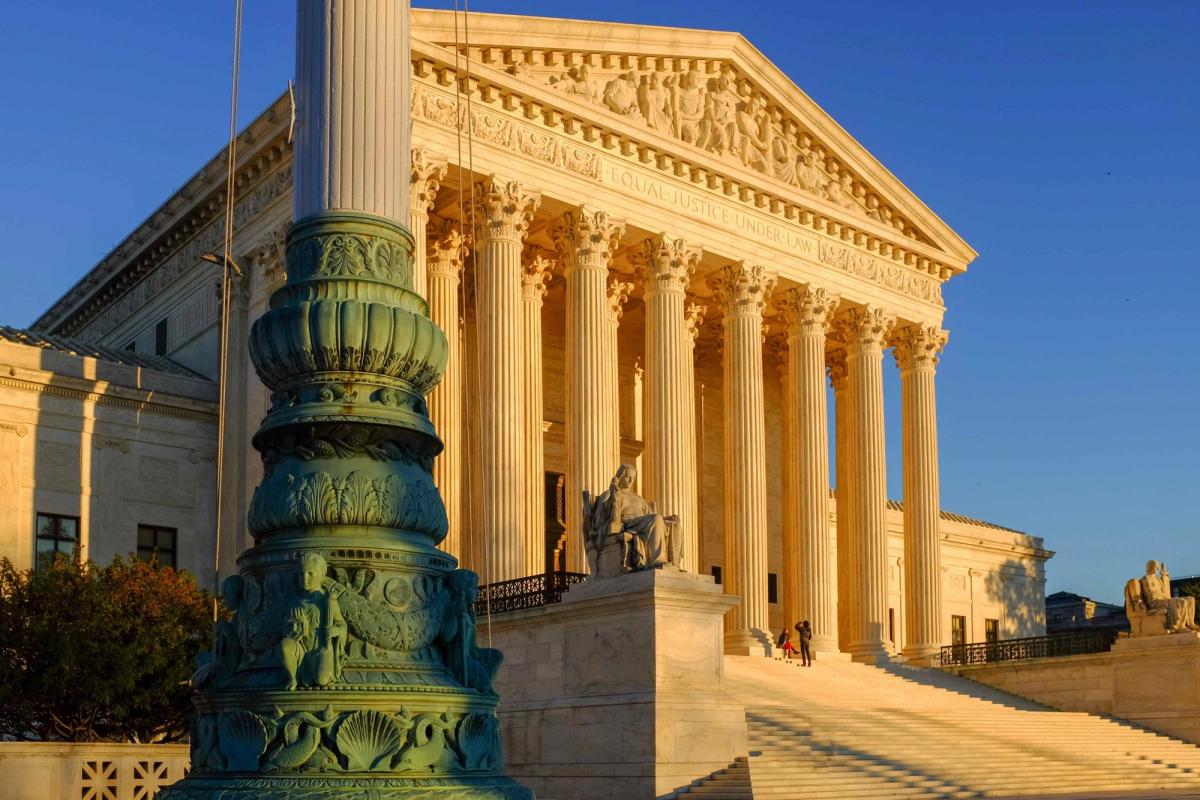
# Supreme Court Justice Responds to Dissent with Bench Statement
A Supreme Court justice has delivered an unusual oral response from the bench to a colleague's dissenting opinion, marking a rare public clash during argument or opinion delivery. The justices typically reserve their disagreements for written opinions filed simultaneously with decisions.
This departure from customary decorum reflects growing institutional tensions on the Court. Justices increasingly air grievances publicly rather than confining disputes to chambers. Justice Samuel Alito has previously issued statements responding to leaked documents and colleague decisions. Justice Elena Kagan has delivered sharp written dissents challenging majority reasoning from the bench.
The specific exchange centered on statutory interpretation or constitutional doctrine, though the exact legal question remains subject to reporting constraints. One justice articulated a fundamental disagreement with a colleague's approach to precedent or textual analysis, prompting the oral rebuttal rather than waiting for the formal dissent publication.
Legal observers note this represents a broader shift in Court culture under Chief Justice John Roberts. The institution has experienced increased politicization and public partisan criticism. Justices have responded by becoming more public advocates for their jurisprudential positions. Oral responses from the bench amplify disagreements and signal to lower courts and practitioners that consensus on basic legal principles has fractured.
The practical effect extends beyond symbolism. When justices visibly dispute foundational interpretive methodologies during oral argument or opinion announcement, it unsettles lower courts tasked with applying precedent. Circuit courts and district judges must guess which reasoning commands five votes or represents a stable constitutional rule.
This practice also influences the docket. Justices may accept cases specifically to reverse or limit colleagues' prior holdings rather than to resolve genuine circuit splits. The Court's legitimacy depends partly on appearing apolitical and deliberative. Public bench disputes undermine that perception, even when the underlying legal positions rest on genuine jurisprudential disagreement.