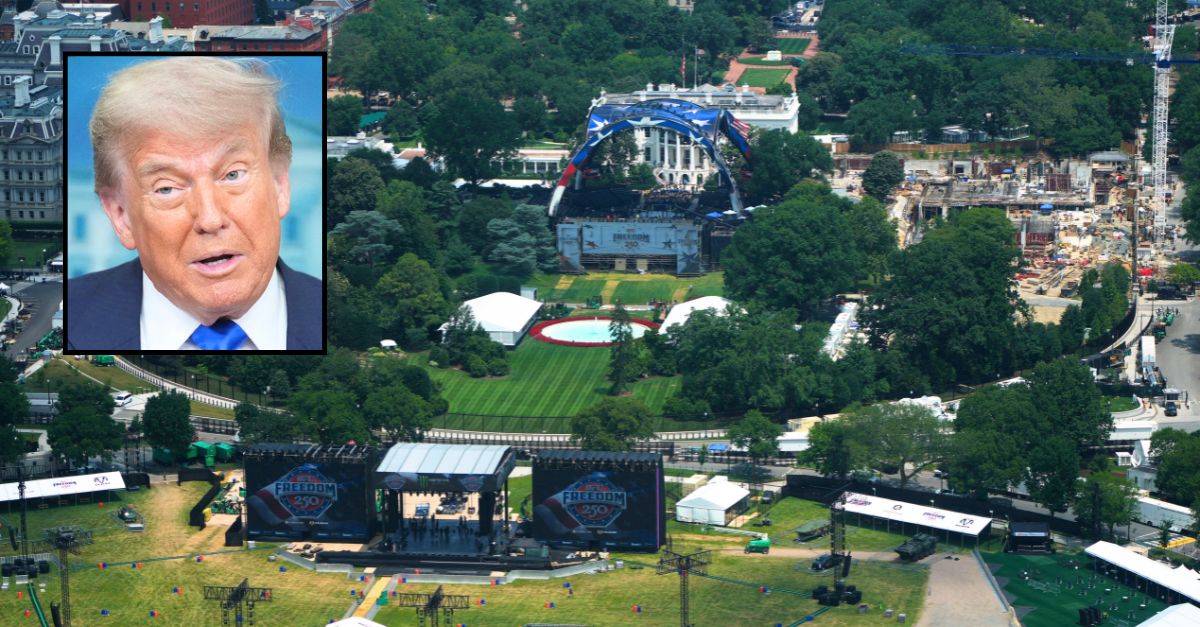
The Trump administration invoked national security concerns to advance a controversial White House ballroom construction project after federal authorities uncovered an alleged plot targeting high-value individuals at a UFC event held at the residence.
Administration officials characterized the new ballroom as "imperative" to presidential protection, linking the facility's construction to security vulnerabilities exposed during the recent threat. The agency has pursued this building project through multiple prior efforts, and the assassination plot allegation represents the administration's latest justification for moving forward.
Federal law enforcement agencies investigate the alleged attack plan, which reportedly targeted attendees at the UFC event hosted at the White House. Details about the conspiracy, including the identities of those involved and specific targets beyond "high value" designations, remain largely undisclosed in public filings.
The ballroom proposal has faced ongoing bureaucratic and legal obstacles. Trump administration officials argue that a newly constructed ballroom would enhance secure event spaces for official functions and reduce the president's exposure during public appearances. They contend that existing White House facilities lack adequate protective infrastructure for large gatherings.
Critics and government transparency advocates question whether the administration is employing security concerns as a rationale to bypass standard architectural review processes and Congressional appropriations procedures. The project requires approval from multiple agencies responsible for the White House complex and its grounds.
The assertion that an alleged assassination plot justifies expedited construction raises constitutional questions about using emergency procedures and national security arguments to accelerate capital projects. Courts have scrutinized similar claims when government agencies attempt to circumvent procedural safeguards.
This represents part of a broader pattern where executive officials cite security threats to justify facility modifications. The specific allegation that the UFC event exposed protective gaps gives federal authorities concrete evidence to support their contention that ballroom construction addresses genuine vulnerabilities rather than serving political or aesthetic purposes.
The Secret Service and other White House security agencies have submitted technical assessments supporting the ballroom construction. These documents purportedly detail