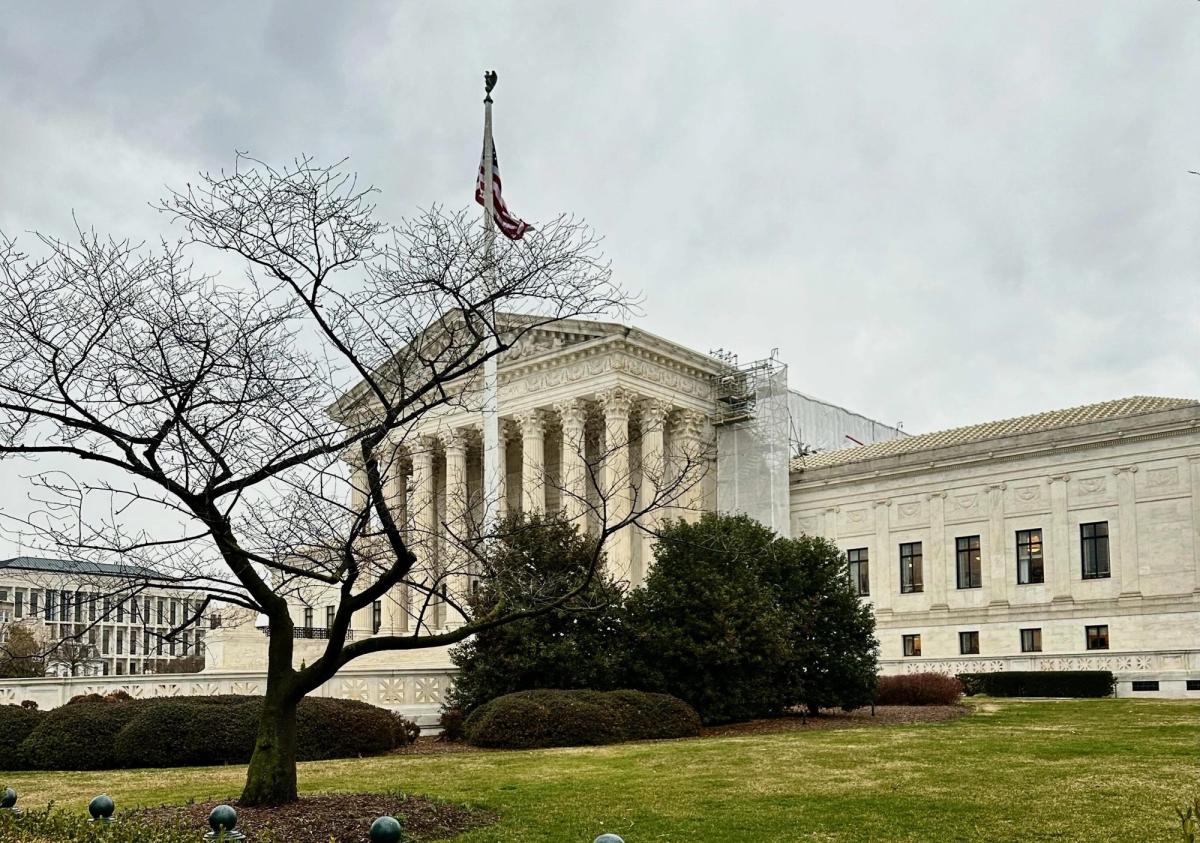
# The Supreme Court's Confusing Use of "Principles"
The Supreme Court relies heavily on undefined doctrinal "principles" when deciding cases, creating confusion about what binds lower courts and future litigants. Legal scholars increasingly point to the Court's loose language around foundational concepts as a source of interpretive chaos across the federal judiciary.
The problem centers on how the justices invoke broad principles without specifying their scope or binding effect. When the Court references constitutional "principles" or established legal "principles," it often fails to clarify whether these statements constitute binding holdings, persuasive guidance, or mere dicta. Lower courts struggle to distinguish between core holdings and aspirational language, leading to conflicting interpretations in subsequent cases.
This imprecision matters practically. Circuit courts face uncertainty about which Supreme Court pronouncements require obedience and which permit flexibility. When the Supreme Court reverses lower court decisions based on "principles," those courts lack clear instruction for future similar cases. Litigants cannot reliably predict outcomes because the operative legal rule remains ambiguous.
The issue compounds with the Court's recent trend toward originalism and textualism, approaches that supposedly demand precision and fidelity to specific textual meaning. Yet originalist opinions themselves sometimes deploy "principles" vaguely, undercutting their own methodological commitments. A principle derived from historical sources carries different weight than one announced as policy preference, but the Court's opinions often blur this distinction.
Scholars argue the Court should either adopt stricter conventions distinguishing holdings from principles, or explicitly define each principle's binding scope and application. Some suggest using principle language only for well-settled doctrines with clear precedent, not novel interpretations.
The practical consequence extends beyond academic pedantry. Businesses making compliance decisions, federal agencies crafting regulations, and lower courts handling dockets need certainty about what the Supreme Court actually requires. V