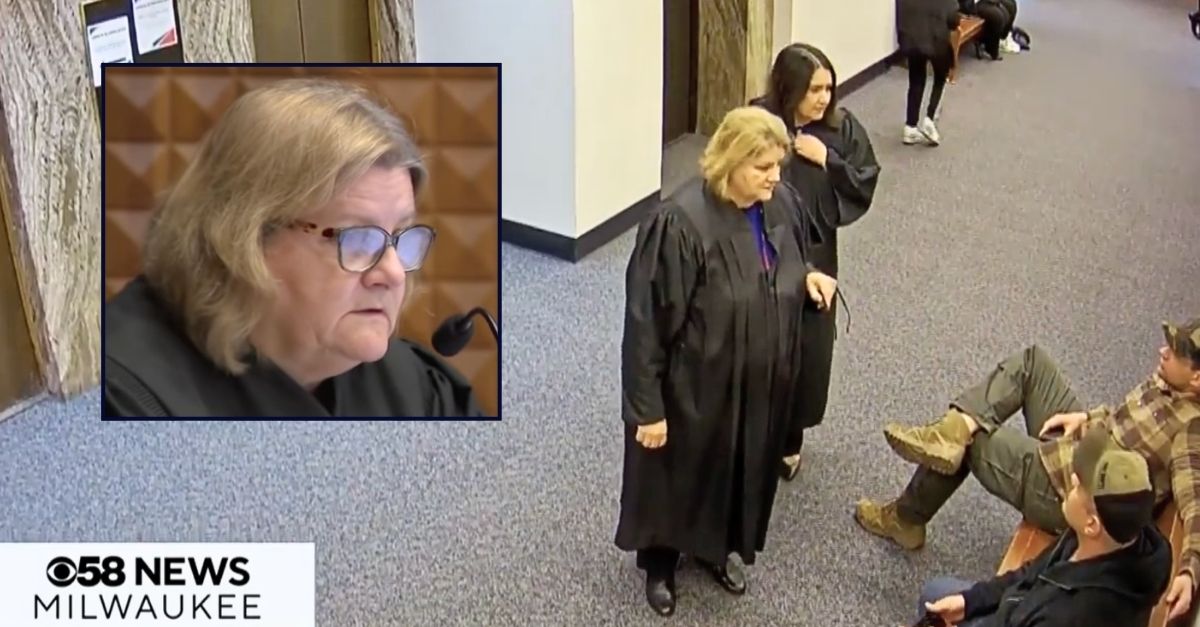
A federal judge rejected Hannah Dugan's bid to overturn her obstruction of justice conviction on Tuesday. Dugan, a former Wisconsin state judge, was convicted last year of impeding Immigration and Customs Enforcement agents during an enforcement operation at a courthouse.
The conviction stems from an incident where ICE conducted what Dugan characterized as a "targeted operation" at the courthouse. During the operation, Dugan obstructed federal agents attempting to arrest an immigrant. The specific details of her conduct during the incident formed the basis of the government's case against her.
Dugan filed a motion seeking to overturn the conviction, but the federal judge denied her request. The denial means her conviction stands and she faces sentencing consequences for the obstruction offense.
The case raises questions about judicial immunity and the proper boundaries between protecting courtroom decorum and interfering with federal law enforcement operations. Courts have long protected judges from liability for actions taken in their judicial capacity, but obstruction of justice represents a separate criminal matter distinct from judicial authority.
Dugan's conviction reflects the government's position that personal views about immigration enforcement do not shield a judge from criminal liability when actively hindering federal agents. The ruling reinforces that judges cannot use their position or courtroom authority as a basis to prevent lawful arrests or other law enforcement activities.
The decision carries implications for judicial conduct rules and the relationship between state courts and federal agencies. While judges retain broad discretion to manage their courtrooms, that authority does not extend to physically or procedurally obstructing federal law enforcement from executing lawful operations on courthouse premises.