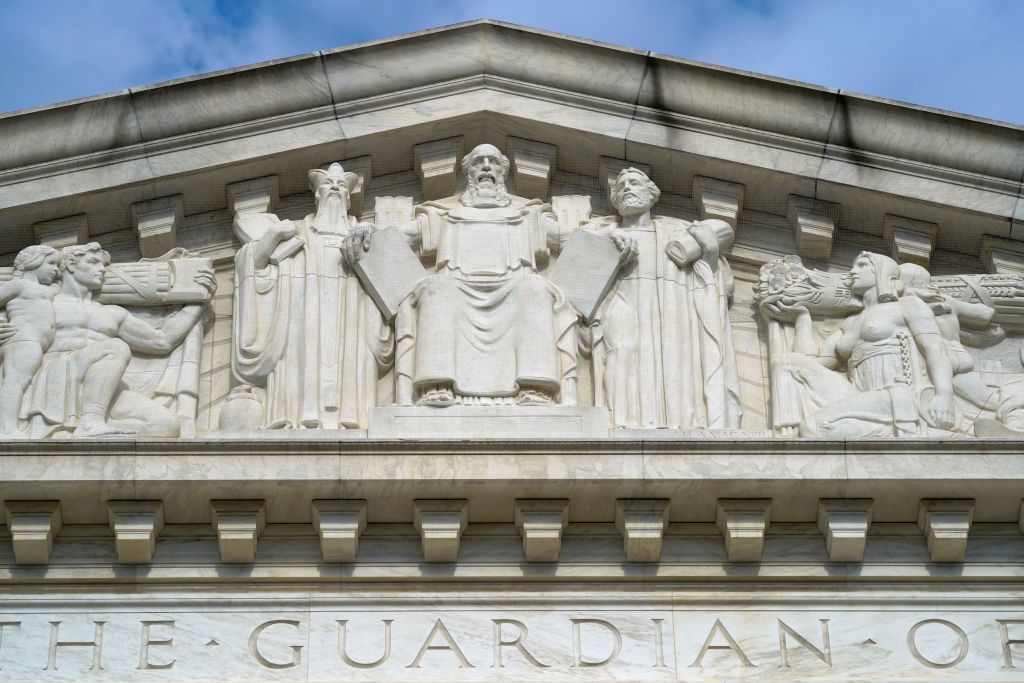
The U.S. Supreme Court has rejected two separate petitions for certiorari, declining to hear a case involving an elementary school student disciplined over an AR-15 hat and another case brought by a death row inmate claiming racial discrimination in jury selection.
In the first matter, an elementary school student challenged school discipline imposed after wearing a hat displaying an AR-15 rifle image. The student's legal representatives argued the school violated First Amendment free speech protections by suspending or restricting the student's expression. The lower courts rejected the constitutional challenge, finding the school's disciplinary action permissible under student speech jurisprudence. The Supreme Court's denial of certiorari leaves the lower court judgment intact and suggests the justices saw no compelling reason to review school speech restrictions.
The second petition came from a death row inmate asserting that racial discrimination infected his jury selection process in violation of the Sixth Amendment and Batson v. Kentucky standards. Batson established that prosecutors cannot exercise peremptory challenges to remove jurors based on race. The inmate contended that systematic exclusion of jurors sharing his race prevented a jury truly representative of the community and undermined his right to a fair trial. Federal courts rejected his argument after reviewing jury selection records. The Supreme Court's denial of certiorari leaves his conviction and death sentence undisturbed.
Both denials reflect the Court's gatekeeping function. The Court receives thousands of petitions annually but grants only a small fraction. Denial carries no statement on the merits and does not endorse the lower court's reasoning. Nonetheless, the rejections signal the justices found neither case presented questions warranting Supreme Court review.
For schools, the decision preserves existing latitude to discipline students for speech deemed disruptive or threatening, including imagery related to weapons. For death row inmates pursuing appeals, the ruling underscores the difficulty of overturning