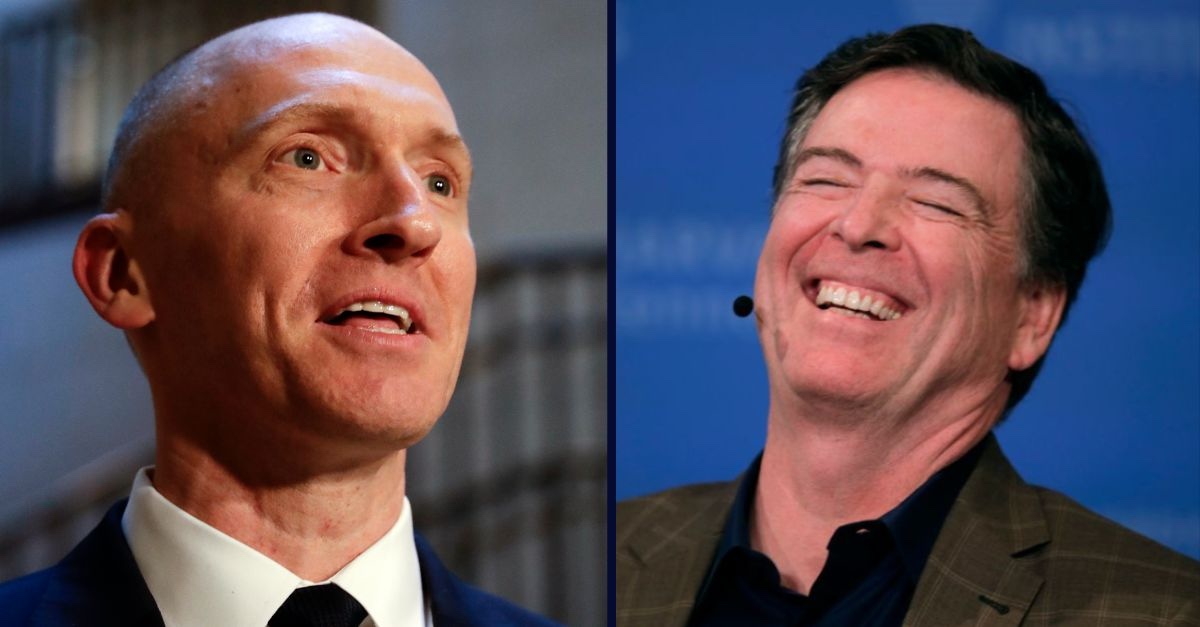
Carter Page's civil lawsuit against former FBI Director James Comey and other government officials has been rejected by the Supreme Court. The justices declined to hear Page's petition without issuing an opinion or explaining their reasoning, effectively ending his legal challenge over surveillance he characterizes as unlawful.
Page, a former Trump campaign foreign policy advisor, sued Comey and other FBI officials alleging they violated his constitutional rights through surveillance conducted during the 2016 Russia investigation. The case centered on the FBI's use of Foreign Intelligence Surveillance Act (FISA) warrants to monitor Page's communications. Page argued the surveillance lacked proper legal foundation and that officials acted in bad faith.
The Supreme Court's refusal to grant certiorari leaves lower court rulings against Page standing. Federal courts previously rejected his claims, determining that officials obtained the FISA warrants through legally sufficient processes and that Page failed to establish the violations necessary to support his lawsuit. The courts also found that qualified immunity protected many defendants from personal liability.
The outcome represents a significant defeat for Page. Qualified immunity, a doctrine that shields government officials from damages unless they violated clearly established rights, proved a formidable barrier in his case. Lower courts determined that even if surveillance problems existed, the legal landscape in 2016 did not clearly establish that the officials' conduct violated Page's rights.
This decision carries implications for FISA warrant procedures and the legal protections available to Americans targeted by government surveillance. While the Court's silence does not constitute precedent, the refusal to hear the case suggests the justices found no compelling constitutional questions warranting review. The ruling effectively closes a major avenue for Page to obtain relief through the federal courts.
Page's lawsuit represented one of the highest-profile civil challenges to the Russia investigation's surveillance tactics. His legal defeat may limit other similar challenges against government officials for conduct during intelligence investigations.