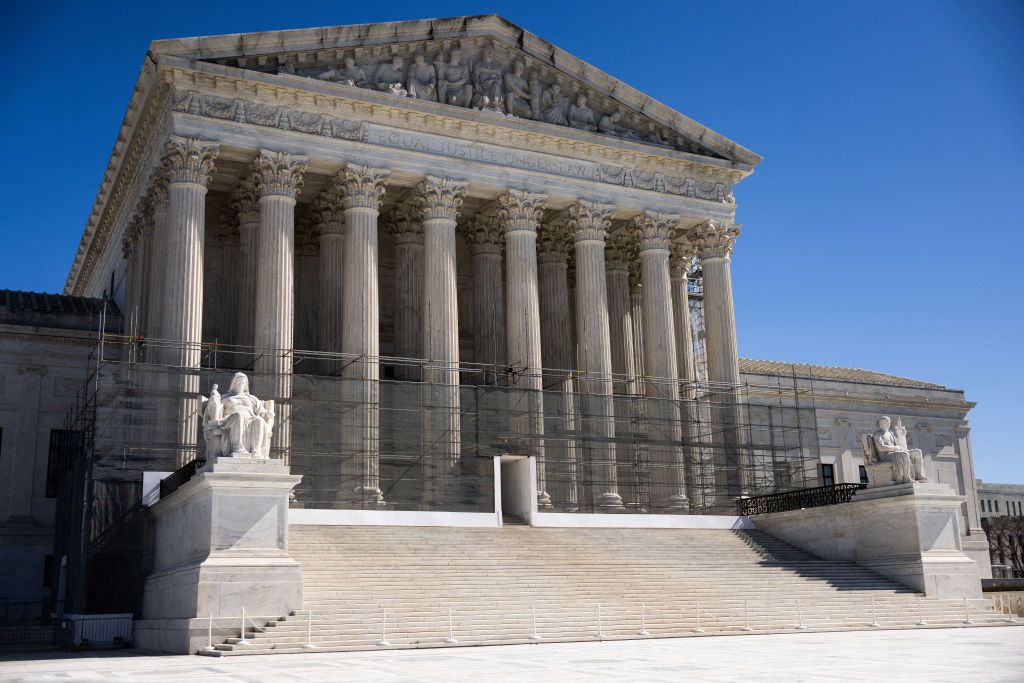
# Supreme Court Rules Crime Venue Must Track Actual Offense Location
The Supreme Court unanimously rejected the government's attempt to prosecute a defendant in a jurisdiction where the crime did not physically occur. The decision reinforces the constitutional protection that criminal trials must take place in the district where the alleged offense happened.
The case centered on the Venue Clause of the Sixth Amendment, which guarantees defendants the right to trial "in the State and district wherein the crime shall have been committed." The government had sought to bring charges in a district where only preparatory or incidental conduct occurred, not the crime itself.
The Court's unanimous ruling means prosecutors cannot manufacture venue by pointing to ancillary activities connected to an offense. Instead, venue attaches to the location where the defendant actually committed the charged crime. This protects defendants from being hauled into distant, inconvenient forums for trial.
The practical implications are significant. Prosecutors regularly investigate crimes across multiple states and districts. This decision limits their ability to select advantageous venues based on prosecutorial convenience or strategic preference. Defense attorneys gain concrete grounds to challenge venue when the government indicts in improper districts.
The ruling applies across all federal criminal prosecutions. It affects cases ranging from interstate fraud to terrorism charges involving multi-state conduct. Any crime with dispersed elements now requires careful analysis of where the core criminal conduct occurred.
The government must establish not merely a connection between the crime and a district, but the actual locus of the offense. Courts will examine the nature of each charged crime, its essential elements, and where the defendant's conduct satisfying those elements took place.
This decision strengthens protections for defendants facing federal charges. It prevents prosecutors from exploiting venue rules to disadvantage the accused by forcing trials in unfamiliar territories far from witnesses and counsel's base of operations. The ruling reflects the Constitution's commitment to fair trial procedures rooted in established legal geography.