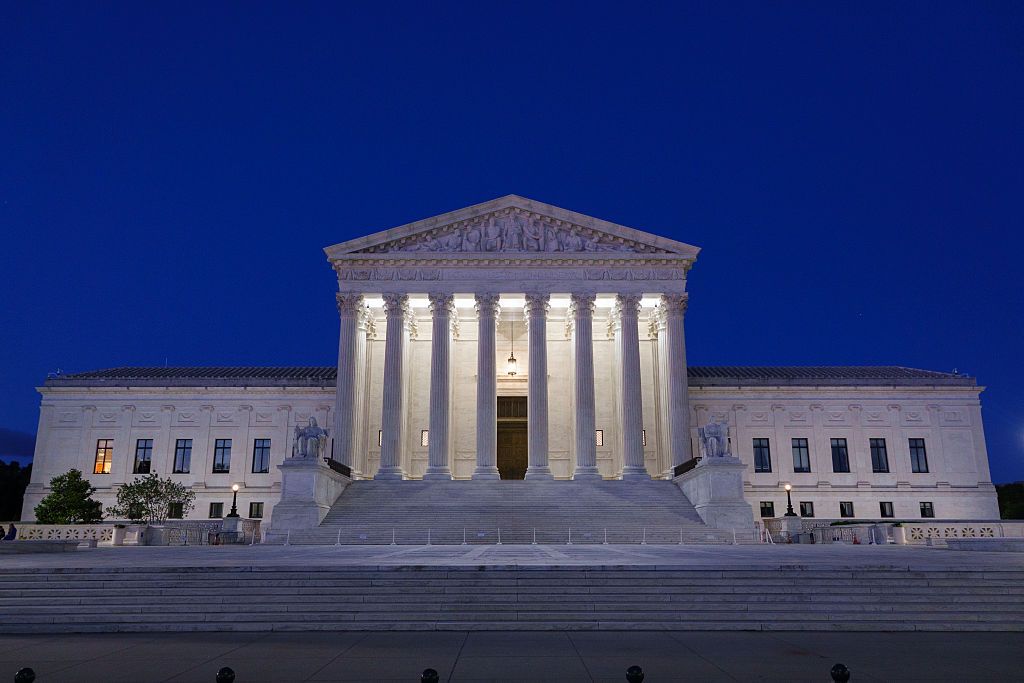
The Supreme Court permitted Alabama to use a congressional map that a lower court found violated the Voting Rights Act by packing Black voters into districts in racially discriminatory ways. The unsigned order came without noted dissents, allowing the state to proceed with the contested map for upcoming elections while litigation continues.
A three-judge federal district court had blocked Alabama's map under Section 2 of the Voting Rights Act, 52 U.S.C. § 10301, which prohibits voting practices that discriminate on the basis of race. The lower court determined that Alabama packed Black voters into certain districts at disproportionately high percentages, diluting their electoral power in surrounding districts. This "packing" strategy reduces the number of districts where Black voters could form effective voting coalitions, thereby diminishing their overall political representation.
Alabama appealed the lower court's decision to the Supreme Court, seeking emergency relief to deploy the map immediately. The Court's order allows the map to take effect without waiting for full briefing and oral arguments on the merits, a procedural move that effectively sides with the state pending further judicial review.
The decision reflects the current Court's approach to voting rights litigation. The conservative majority has narrowed Section 2's application and raised evidentiary standards for proving vote dilution claims. By granting Alabama's request, the Court signaled skepticism toward the lower court's racial gerrymandering finding.
The case remains active on the Supreme Court's docket. Alabama must continue defending the map's constitutionality, but elections will proceed using the challenged districts. This outcome affects hundreds of thousands of Alabama voters and determines which candidates can win congressional seats.
The ruling underscores ongoing tension between the Voting Rights Act and the current Supreme Court's restrictive interpretation of that statute. States like Alabama increasingly succeed in defending maps that earlier Courts would have struck down as discriminatory.