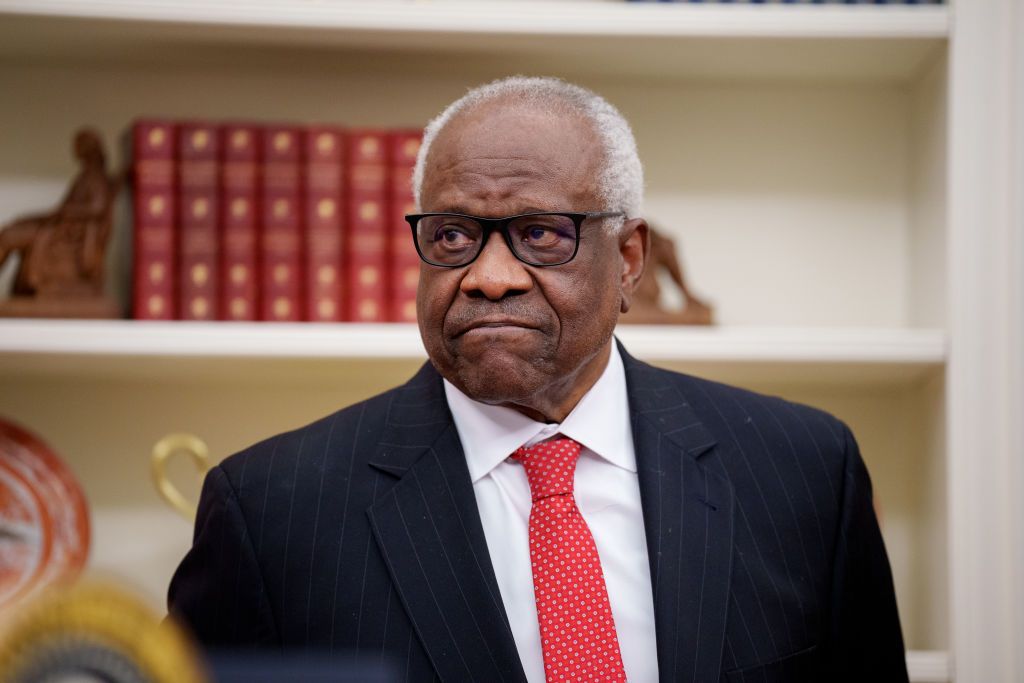
# The Radical Justice Thomas
Justice Clarence Thomas continues to chart a distinctive constitutional path that diverges sharply from his peers on the Supreme Court of the United States. His opinions increasingly rely on originalist methodology and a willingness to reconsider precedents established over decades.
Thomas has signaled openness to revisiting foundational doctrines in areas spanning gun rights, religious liberty, and federal regulatory authority. In recent terms, his concurring opinions have questioned the constitutional basis for established frameworks governing everything from substantive due process to the scope of federal commerce power. His intellectual approach demands that courts examine the original public meaning of constitutional text rather than defer to prior interpretations.
The practical implications for lower courts and litigants are substantial. When Thomas writes separately, conservative legal movements often cite his reasoning as a roadmap for future litigation. His views on the Second Amendment shaped the landmark New York State Rifle and Pistol Association v. Bruen decision in 2022, which struck down New York's licensing scheme. His separate opinions on regulatory power signal potential challenges to the administrative state's foundational authority.
Thomas stands alone or nearly alone on the current bench in certain respects. While other conservatives embrace originalism, Thomas applies it with particular rigor and follows its logic to conclusions his colleagues resist. This creates tension within conservative jurisprudence itself, where justices prioritize judicial restraint or incremental change over Thomas's more aggressive constitutional reconstruction.
For businesses subject to federal regulation and individuals asserting constitutional rights, Thomas's influence extends beyond his votes in decided cases. His opinions function as doctrinal blueprints for future challenges. Environmental regulations, labor law, and administrative enforcement mechanisms all face potential constitutional scrutiny grounded in frameworks Thomas has articulated.
His approach reflects a deliberate choice to reexamine constitutional fundamentals rather than accept the settled interpretations of the twentieth century. Whether this represents principled jurisp