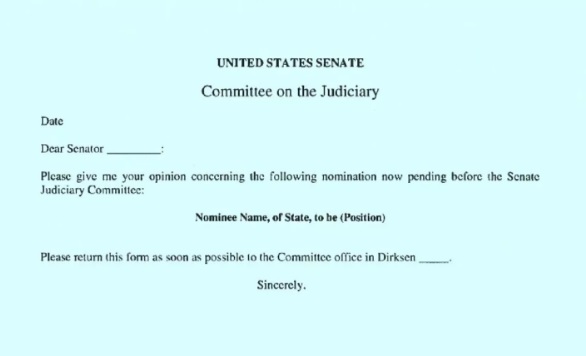
A major law firm partner is advancing toward a federal judicial appointment following the return of the "blue slip," a Senate procedural mechanism that streamlines judicial confirmations. The blue slip process allows home state senators to evaluate and approve judicial nominees from their states before the Senate Judiciary Committee proceeds with confirmation hearings.
The biglaw partner's nomination appears to face minimal opposition, suggesting smooth passage through the Senate confirmation process. Blue slips historically serve as gatekeeping tools for home state senators, enabling them to block or delay nominees they oppose. When senators return blue slips promptly and without objection, judicial nominees typically encounter lighter scrutiny during committee hearings and floor votes.
This development reflects the ongoing reshaping of the federal judiciary through judicial appointments. Federal district and appeals court judgeships represent lifetime positions with substantial influence over civil litigation, regulatory matters, and constitutional questions. Appointing experienced practitioners from major law firms to the bench brings private sector perspective to judicial decision-making.
The nominee's biglaw background carries practical implications. Partners at large law firms typically handle complex commercial disputes, appellate cases, and high-stakes litigation. This experience often translates to demonstrated legal expertise and institutional familiarity with federal court procedures, factors Senate committees consider during vetting.
Blue slip procedures have evolved substantially in recent years. Some Senate Judiciary Committee chairs have modified traditional blue slip requirements, affecting how quickly nominees advance. The smooth sailing mentioned here suggests either robust home state senatorial support or application of expedited procedures that prevent blue slip delays.
Federal judicial vacancies remain numerous, and both political parties prioritize filling these seats. Each appointment reshapes jurisprudence in particular regions and substantive areas of law. A biglaw partner ascending to the federal bench means losing experienced legal talent from private practice while gaining judicial decision-makers with commercial litigation backgrounds.
The nominee's confirmation would add another federal judge with significant private sector legal experience, potentially influencing how federal