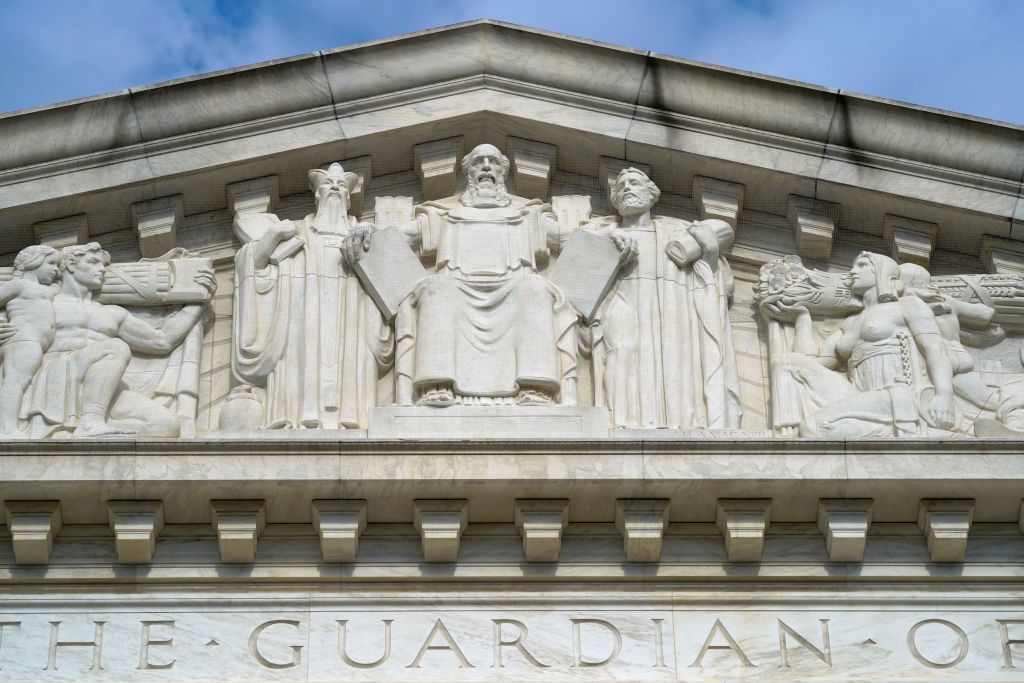
# Court Declines Appeals on Jury Selection and Student Speech Cases
The Supreme Court refused to hear two distinct cases this week, letting lower court decisions stand on jury selection discrimination and student First Amendment speech rights.
In the first matter, a death row inmate challenged his conviction based on alleged racial discrimination during jury selection. The inmate argued that prosecutors violated the Equal Protection Clause by striking jurors of his race in violation of Batson v. Kentucky, the 1986 Supreme Court precedent requiring courts to evaluate whether peremptory challenges target jurors based on protected characteristics. The justices' denial leaves the appellate court's affirmation of his conviction intact, effectively ending his challenge at the federal level.
The second case involved an elementary school student whose parents challenged a school's discipline after the child wore an AR-15 rifle-themed hat to campus. The student's family argued the school violated the child's First Amendment right to free speech by punishing the attire. Lower courts rejected the claim, finding the school's action reasonable under Tinker v. Des Moines, which permits schools to restrict student expression that causes substantial disruption or material interference with school operations. The Supreme Court's denial indicates no interest in revisiting student speech boundaries in this context.
Both rejections reflect the Court's current posture on taking new cases. The Batson issue remains contentious in criminal justice circles, with numerous studies suggesting racial discrimination persists despite the framework's intent. Death penalty advocates and criminal justice reformers frequently cite jury selection bias as grounds for relief, yet the Court has grown less receptive to such claims in recent years.
The student speech denial similarly signals the Court's reluctance to expand First Amendment protections for minors in school settings absent extraordinary circumstances. Schools retain substantial discretion to manage campus disruptions and safety concerns under existing precedent.
These denials, while technically refusing review rather than resol