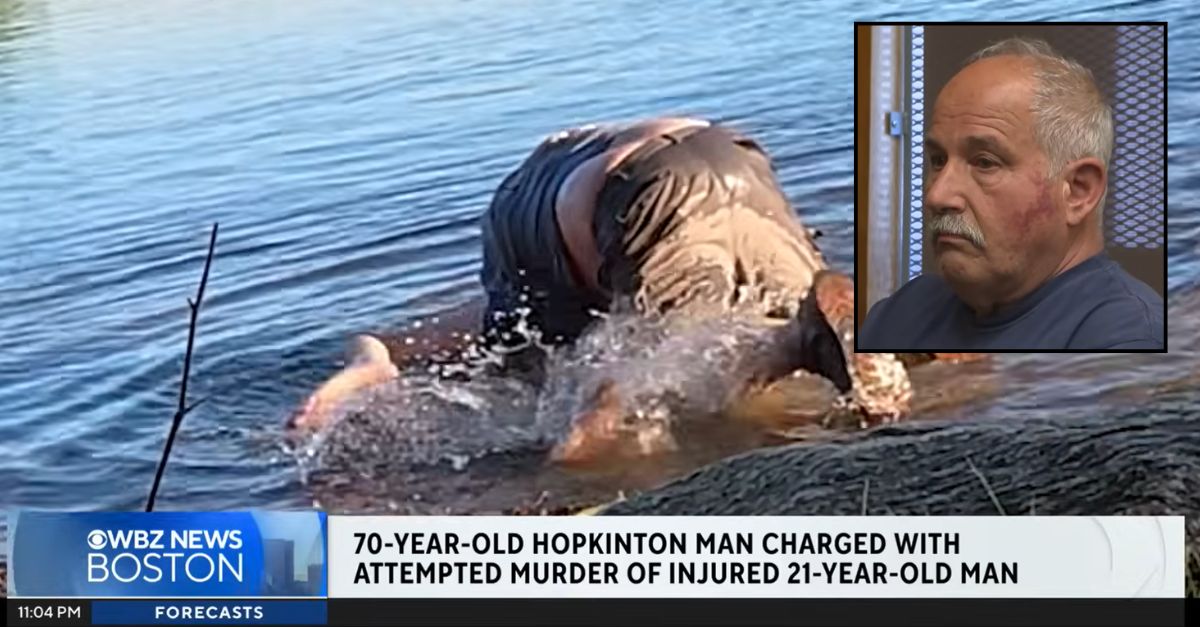
A 70-year-old man faces attempted murder charges after police say he tried to drown a 21-year-old during a dispute over residency. Video evidence shows the older man, identified as Dana, slapping the younger man in the face before tackling him to the ground and forcefully holding his head underwater.
The victim, who was on crutches at the time of the assault, was particularly vulnerable during the attack. Authorities obtained video footage documenting the violent sequence of events, which provides direct evidence of the alleged attempted drowning.
The incident arose from an argument concerning residency arrangements. Police say Dana's statement "It's time to go" preceded the physical assault, suggesting he was attempting to force the younger man from a shared residence.
The charges reflect the severity of the conduct. Attempted murder typically requires proof that the defendant acted with specific intent to kill and took a substantial step toward that goal. Holding someone's head underwater qualifies as conduct capable of causing death, satisfying both elements. The victim's physical disability, evidenced by his use of crutches, strengthens prosecution arguments that the defendant knew the victim could not effectively resist or escape.
Age disparities in violent crime cases often complicate sentencing considerations. While courts generally avoid age-based sentencing that rises to constitutional proportionality violations, a 70-year-old's advanced age may factor into presentence investigation reports and judicial discretion at sentencing, particularly regarding incarceration length.
The video evidence substantially advantages the prosecution. Rather than relying on witness testimony alone, authorities possess recorded documentation of the assault sequence, reducing evidentiary disputes over what occurred. This recording likely accelerated charging decisions and strengthens plea negotiation leverage.
For the defendant, video evidence constrains defensive options. Claims of accident or mutual combat struggle against documented footage. Defense counsel typically pursues mental health evaluations, prior injuries, or medication