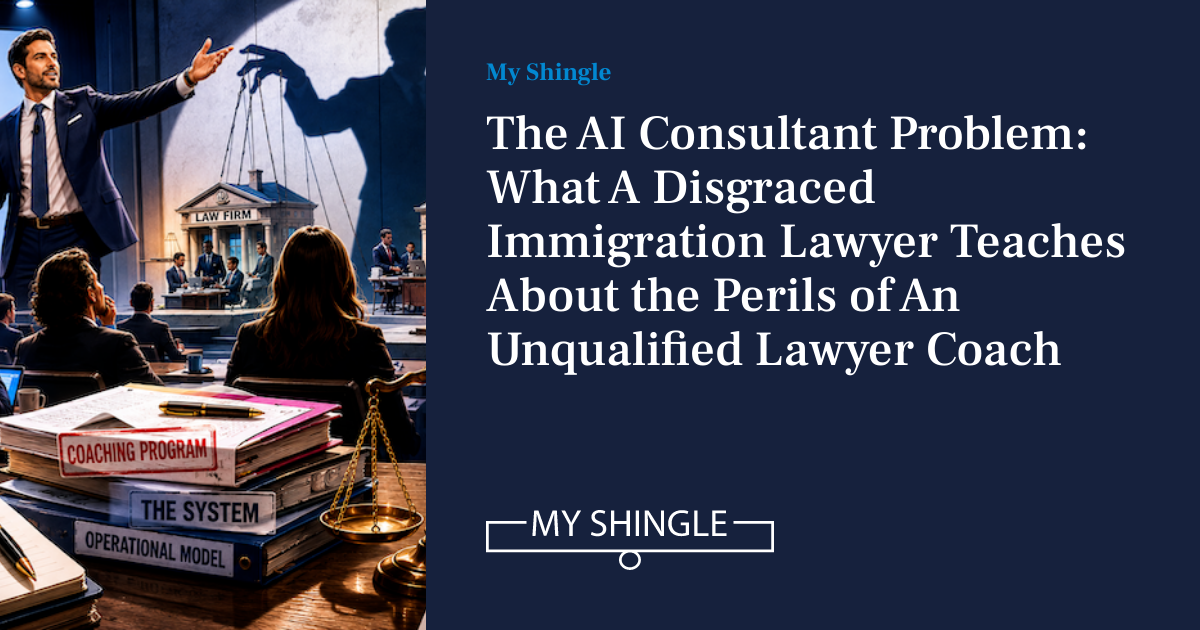
A disgraced immigration lawyer's fall from grace illustrates the professional and financial dangers when attorneys hire unqualified coaches or consultants, particularly those claiming expertise in artificial intelligence and legal practice management.
The case demonstrates how lawyers face professional discipline, malpractice liability, and reputational damage when they rely on guidance from individuals lacking genuine legal credentials or experience. Immigration law presents particular risks because compliance failures directly harm vulnerable clients facing deportation or visa denial.
Bar associations regulate the practice of law itself, not coaching or consulting. This creates a regulatory gap. An unqualified coach can offer flawed legal strategy, outdated case law analysis, or unethical billing practices without facing direct bar consequences. The attorney who implements that bad advice, however, remains fully responsible to clients and disciplinary authorities.
The intersection of artificial intelligence and legal practice amplifies these risks. AI tools can generate plausible-sounding but legally incorrect analysis. A consultant without deep immigration law knowledge cannot distinguish between reliable AI output and hallucinated case citations. Lawyers then file briefs containing fabricated authority or fundamentally flawed arguments, triggering malpractice claims and bar discipline.
Clients suffer most acutely. Immigration clients pay substantial fees expecting competent representation. When a lawyer follows poor coaching and loses a case through preventable error, the client faces immigration consequences with no practical remedy beyond a difficult malpractice suit.
Attorneys considering coaching relationships should verify credentials directly with bar associations and professional organizations. They should demand references from other attorneys in their specific practice area. Marketing claims about AI expertise or revolutionary practice methods warrant skepticism unless backed by demonstrated competence.
Law firms should implement quality controls. Partners should review outside coaching advice before implementation. Lawyers should maintain independent judgment about legal strategy rather than outsourcing critical decisions.
Bar associations increasingly recognize this problem. Some jurisdictions now scrutinize coaching arrangements in disciplinary proceedings.