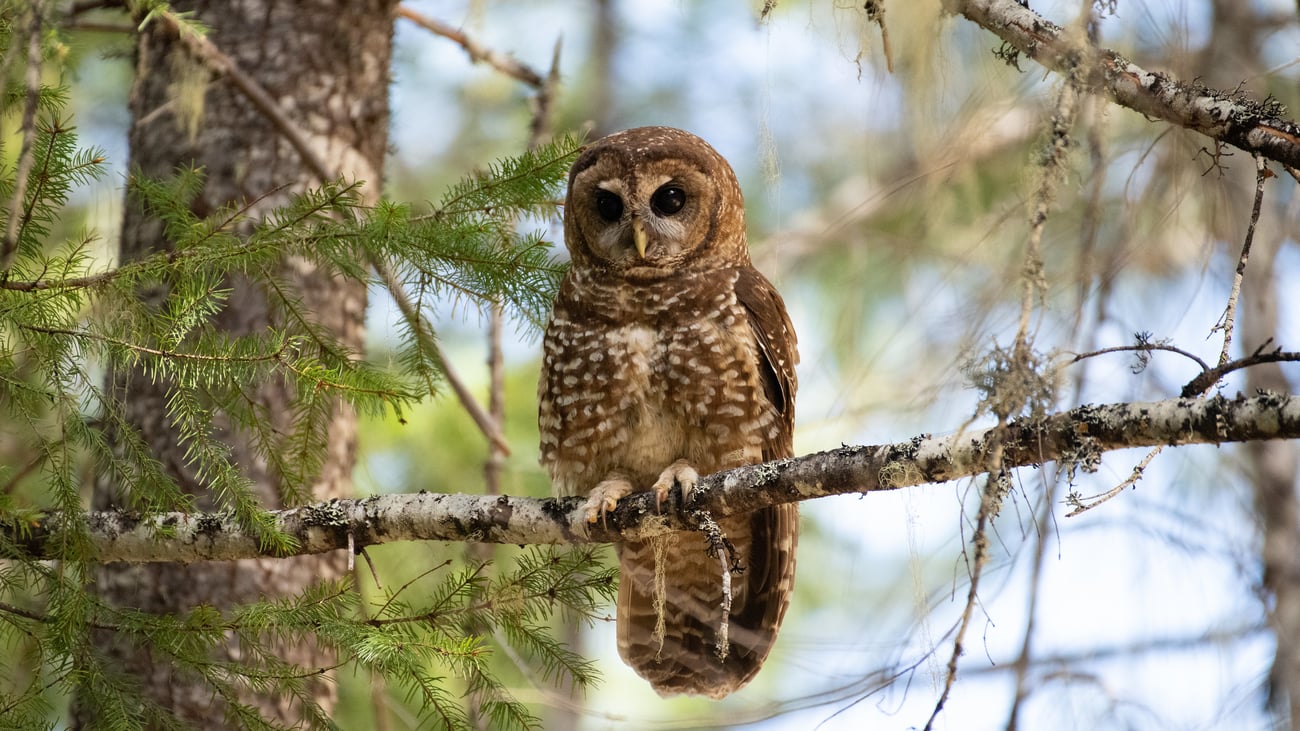
Animal rights organizations have challenged a U.S. Fish and Wildlife Service permit authorizing the removal of barred owls in northern spotted owl habitat, arguing the agency relied on inadequate scientific data in violation of federal environmental law.
The nonprofits contend that USFWS failed to meet standards required under the National Environmental Policy Act (NEPA) when it issued the special purpose permit. The groups claim the agency's decision rested on faulty or incomplete data regarding the ecological impacts of barred owl removal on the broader ecosystem and the effectiveness of culling in protecting the threatened northern spotted owl population.
This dispute centers on a longstanding conservation conflict. The northern spotted owl, listed as threatened under the Endangered Species Act, faces predation from barred owls, which have expanded their range across North America. USFWS has pursued lethal removal of barred owls as a strategy to protect spotted owl populations in the Pacific Northwest and California.
The challenge raises procedural and substantive questions about agency decision-making under environmental statutes. NEPA requires federal agencies to prepare environmental impact statements or assessments before taking major actions, analyzing reasonable alternatives and potential consequences. The nonprofits argue USFWS skipped proper NEPA procedures or failed to base its permit decision on an adequate administrative record.
The legal significance extends beyond owl management. Courts have increasingly scrutinized agency environmental determinations, particularly when scientific uncertainty exists. If the organizations prevail, they could force USFWS to conduct a more rigorous environmental review before authorizing further barred owl removals. This could delay or reshape the agency's spotted owl recovery program across multiple states.
The dispute also highlights tensions in conservation policy. Environmental groups disagree on culling strategies, with some opposing lethal removal of barred owls as ecologically harmful or ethically problematic, while others support it as necessary to save the spotted owl from extinction.