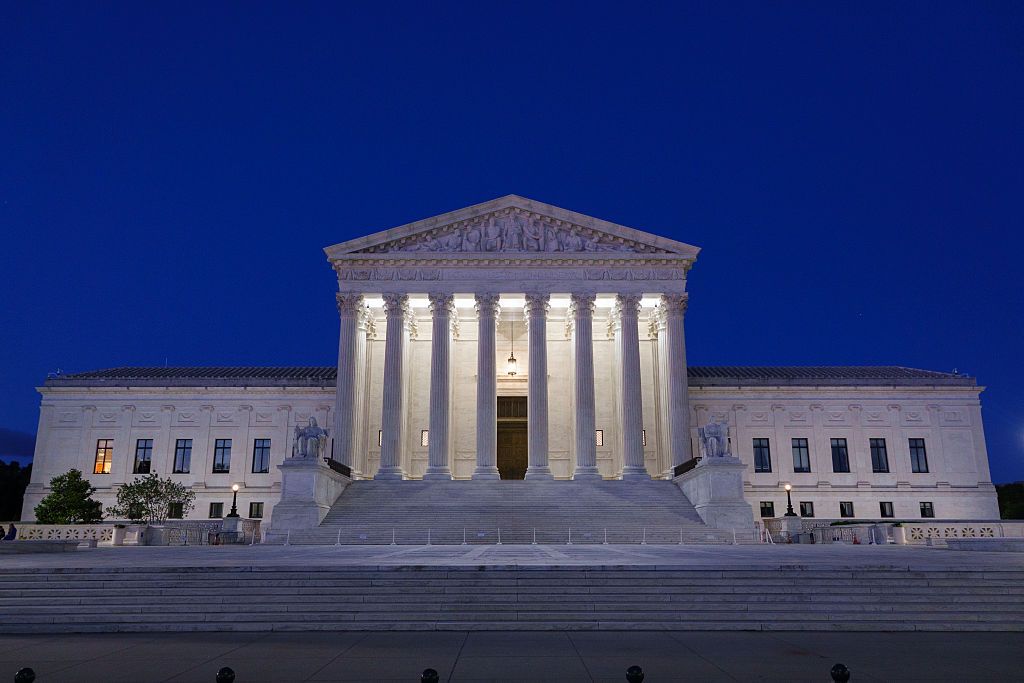
The Supreme Court allowed Alabama to proceed with a congressional redistricting map that a lower court had invalidated as racially discriminatory. The decision came through an emergency application filed with the high court, preserving Alabama's current district lines for the 2024 election cycle.
A three-judge federal district court previously ruled that Alabama's map violated the Voting Rights Act by diluting Black voters' electoral power across multiple districts rather than concentrating their voting strength in a single district where they could elect a preferred candidate. The panel found the state packed and cracked Black voters to suppress their influence.
Alabama appealed directly to the Supreme Court, requesting emergency relief to maintain the existing map ahead of the 2024 elections. The state argued that implementing a new map so close to Election Day would create logistical chaos and voter confusion.
The Supreme Court, without ordering full briefing or hearing oral arguments, granted Alabama's application. The order effectively froze the lower court's decision pending further review. Justices did not specify their reasoning, following the Court's practice in emergency applications.
This ruling reflects the Court's current conservative majority approach to voting rights cases. The decision permits Alabama to use a map that the district court found violated federal law protecting minority voting rights. The Voting Rights Act prohibits election practices that discriminate based on race or that minimize minority voters' ability to elect candidates of their choice.
The outcome signals the Court's willingness to intervene in voting rights disputes on behalf of states resisting redistricting changes deemed necessary to remedy racial discrimination. Civil rights groups characterized the decision as undermining voting rights protections. Alabama maintained the map reflected legitimate redistricting criteria and population data.
The case will likely receive full Supreme Court review in coming months, where the justices will decide whether the district court's Voting Rights Act findings were correct and whether electoral timing justified suspending the lower court's remedy.