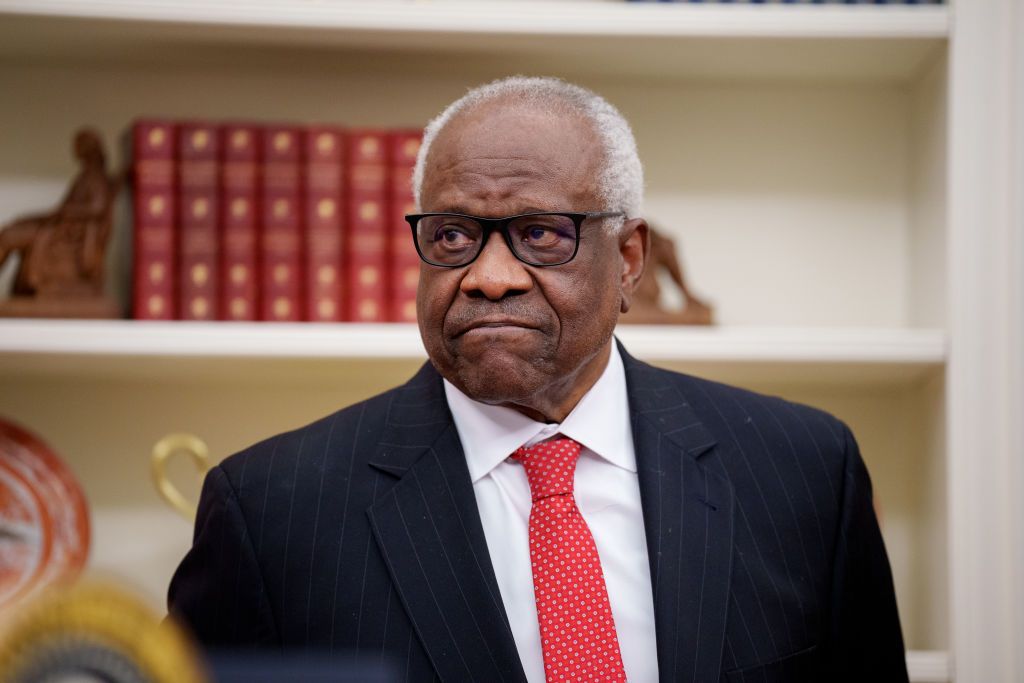
# Supreme Court's Thomas Pushes Conservative Jurisprudence Into New Territory
Justice Clarence Thomas continues to reshape constitutional doctrine by questioning precedents other conservative justices treat as settled law. His opinions increasingly challenge foundational cases and legal frameworks that have governed American law for decades.
Thomas has signaled willingness to reconsider landmark decisions in multiple areas. His concurring opinion in New York State Rifle & Pistol Association v. Bruen (2022) questioned precedent underpinning gun regulations. He has also indicated skepticism toward the constitutional basis for federal regulatory agencies themselves, threatening the Administrative Procedure Act framework that governs how agencies like the EPA and FDA operate.
His approach differs fundamentally from Chief Justice John Roberts and Justice Samuel Alito, who favor incremental doctrinal shifts. Thomas instead pursues originalism to its logical endpoints. This means revisiting cases decided under different constitutional theories, even when those decisions have anchored decades of policy and business reliance.
The practical implications run deep. If Thomas's view gains majority support, federal environmental law, labor regulation, and consumer protection could face wholesale restructuring. Corporations that have built compliance systems around current agency authority face uncertainty. Litigants now challenge statutes previously considered bulletproof.
Thomas's influence extends beyond cases he authors. Lower courts cite his concurring opinions as potential roadmaps for future doctrine. Conservative legal networks prepare test cases designed to reach him with questions he has already signaled interest in addressing.
Other justices navigate around his positions. Alito and Brett Kavanaugh sometimes accept narrower rulings that avoid the transformative questions Thomas raises. This creates internal tension within the conservative bloc.
The Thomas approach reflects a genuine jurisprudential philosophy rather than partisan calculation. He applies originalist methodology consistently across cases, though results favor conservative outcomes. Business groups split on implications. Some embrace dereg