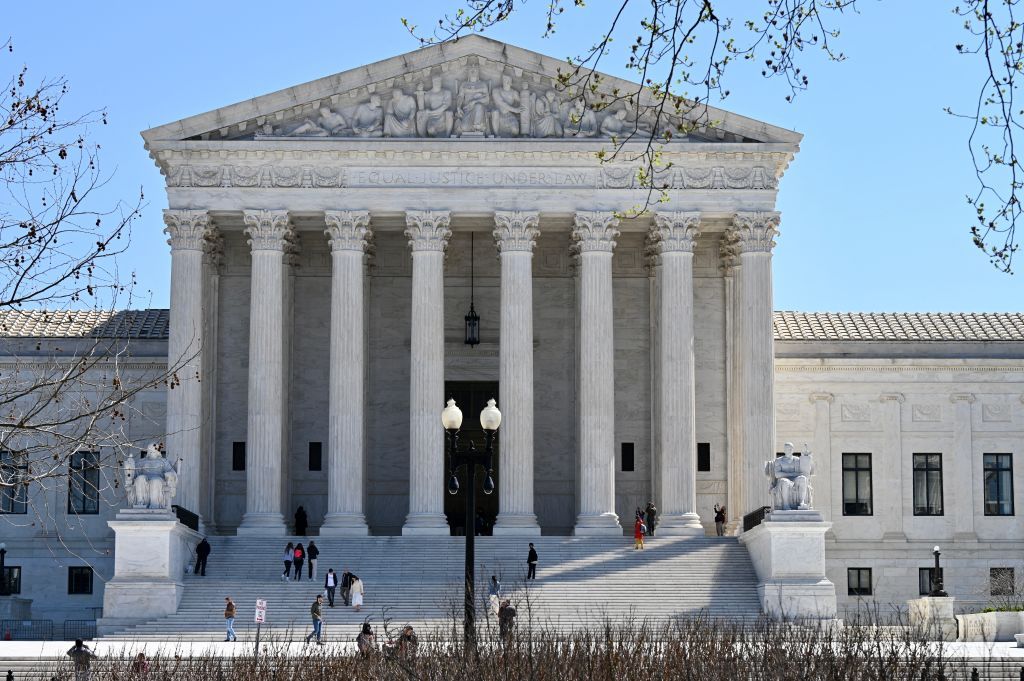
# Supreme Court Urged to Uphold Lower Court Decision Striking Alabama Congressional Map
The U.S. Court of Appeals for the Eleventh Circuit struck down Alabama's congressional redistricting map, finding it violated the Voting Rights Act by packing Black voters into districts to dilute their electoral power across the state. Voting rights advocates now urge the Supreme Court to affirm this decision and reject Alabama's appeal.
The lower court determined that Alabama's mapmakers intentionally concentrated Black voters in specific districts while reducing their presence in others. This gerrymandering practice, known as vote dilution, effectively reduces the political influence of Black citizens across multiple districts. The court found the state failed to justify its actions under Section 2 of the Voting Rights Act, which prohibits voting practices that discriminate based on race or color.
Alabama officials argue the map reflects legitimate redistricting principles and denies any discriminatory intent. The state contends that population shifts and traditional redistricting factors drove the map's design.
The Eleventh Circuit rejected these arguments. The panel concluded that the evidence of intentional discrimination was substantial. State legislators had access to racial data during mapmaking, and the resulting configuration departed significantly from previous district lines in ways that correlated with racial composition.
Voting rights groups filing briefs before the Supreme Court emphasize the precedential stakes. A Supreme Court reversal would weaken Section 2 protections nationwide and embolden states to adopt similar vote-dilution strategies. They stress that the Voting Rights Act demands race-conscious scrutiny when voting patterns show clear racial polarization.
The case arrives as the Supreme Court has narrowed voting rights enforcement in recent decisions. In 2021, the Court limited Section 2 challenges in Brnovich v. Democratic National Committee. Now the Court faces whether to extend that restrictive approach to vote-dilution claims or reaffir