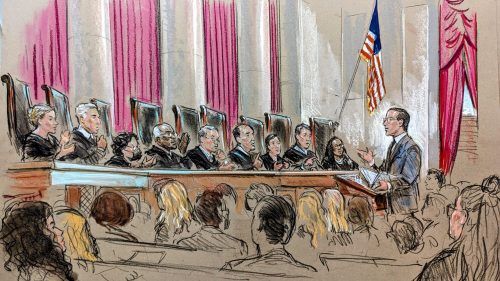
# The Roberts Court's Record on the First Amendment
The Supreme Court under Chief Justice John Roberts has handed down decisions that reshape how the nation handles free speech protections, establishing a divided record on core First Amendment questions. The Roberts court spans from 2005 onward and has issued rulings that expand certain speech rights while narrowing protections in other contexts.
The court extended First Amendment protections in Citizens United v. Federal Election Commission (2010), striking down restrictions on independent political spending by corporations and unions. That decision treated campaign spending as protected speech, fundamentally altering campaign finance law. The same court later invalidated the Stolen Valor Act in United States v. Alvarez (2012), rejecting restrictions on false statements in most contexts.
Yet the Roberts court has constrained First Amendment protections in other areas. In Holder v. Humanitarian Law Project (2010), the court upheld material support statutes targeting terrorism-linked speech and activity. The decision allowed government to restrict speech that "lends itself to" furthering designated terrorist organizations.
The court also limited religious speech protections in some circumstances while protecting them in others. In Employment Division v. Smith alternatives, the court has navigated free exercise claims with varying outcomes depending on factual contexts and statutes involved.
Speech hostile to government authority received mixed treatment. The court protected offensive speech in numerous cases but has upheld restrictions on speech directed at inciting imminent violence or breaching national security. Decisions involving social media and digital-age speech remain limited, leaving questions about how Roberts court principles apply to internet expression.
Legal scholars debate whether the Roberts court prioritizes speech by powerful speakers and entities over other speakers. Critics note that campaign finance decisions favor wealthy contributors and corporations. Supporters contend the court consistently applies content-neutral principles without censoring disfavored viewpoints.
The court's First Amendment jurisprudence reflects ongoing tension between