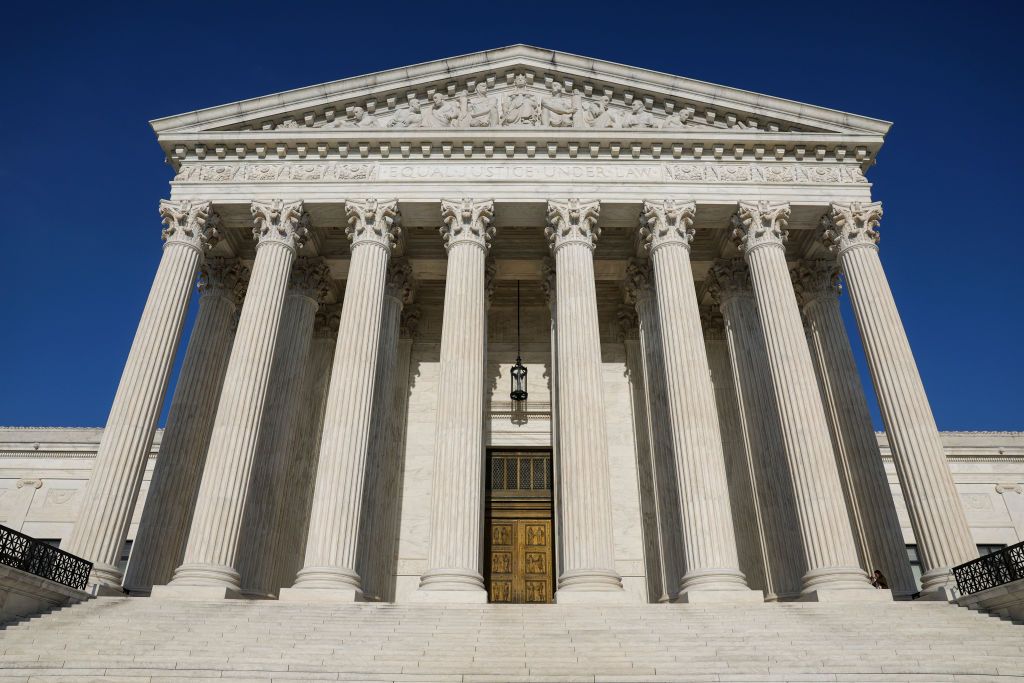
Alabama has asked the Supreme Court to overturn a lower court's ruling that struck down the state's congressional map as racially discriminatory. The state urges the justices to allow use of the map while its legal challenge proceeds through the courts.
A federal three-judge panel ruled that Alabama's map violated Section 2 of the Voting Rights Act by packing Black voters into districts in a way that dilutes their electoral power in surrounding areas. The lower court found that the redistricting scheme subordinated race-neutral redistricting principles to racial considerations, effectively reducing Black voters' ability to influence elections in multiple districts.
Alabama argues the lower court misapplied voting rights law and contends the map reflects legitimate partisan and geographic factors rather than racial discrimination. The state seeks a stay of the lower court's injunction pending its appeal to the high court, which would allow the map to remain in effect during litigation.
The case arrives as the Supreme Court has shifted rightward on voting rights issues. In recent years, the Court has narrowed Section 5 of the Voting Rights Act and limited federal oversight of election law. The current conservative majority has shown skepticism toward aggressive voting rights enforcement.
Alabama's petition tests whether the Court will revisit how Section 2 applies to congressional maps and whether states can defend maps that courts find use race as a predominant factor in drawing district lines. The outcome affects redistricting battles nationwide, as numerous states face similar challenges to their maps under Section 2.
The lower court's decision aligns with a line of cases holding that vote dilution claims under Section 2 protect minority voters from being packed into a limited number of districts. However, Alabama contends the court applied an overly rigid standard that improperly constrains legitimate redistricting choices.