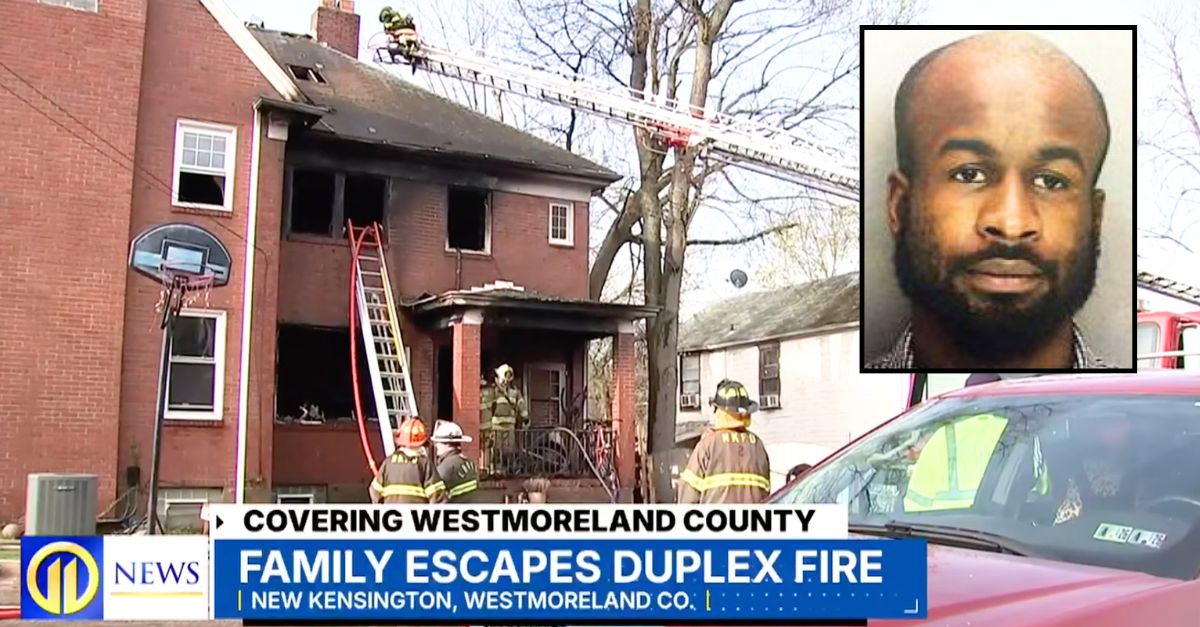
A Pennsylvania man faces serious felony charges after authorities allege he deliberately set fire to a duplex occupied by ten people, including children. The blaze forced residents to escape by jumping from the roof.
According to police, the suspect, identified as the stepbrother of one resident's partner, deliberately ignited the fire. The intensity of the flames left occupants no exit route except the roof. A woman inside the home was forced to throw her children from the structure to save them from the spreading fire. Residents then jumped to escape the inferno.
The fire department responded and extinguished the blaze. Investigators determined the fire was intentionally set rather than accidental. Authorities charged the suspect with arson and multiple counts of attempted murder or endangerment related to the ten occupants present during the incident.
The stepbrother's motive for the alleged arson remains under investigation. Police have not disclosed details about any prior conflicts between the suspect and residents of the home.
Cases involving residential arson with multiple occupants present typically result in enhanced charges. Prosecutors treat arson as a violent felony when human life faces immediate danger. The presence of children in the structure strengthens charges and elevates potential sentences. Attempted murder charges require proof that the defendant acted with intent to kill or with knowledge that death was substantially certain to result.
The woman's account describing her forced choice to throw children from a burning roof provides critical witness testimony about the fire's severity and the defendant's reckless endangerment of minors. Her actions likely prevented deaths but left her family exposed to injuries from the jump.
Pennsylvania arson statutes impose substantial prison sentences for first-degree charges, particularly when structures house multiple occupants. Conviction on multiple attempted murder counts adds consecutive penalties. Bond hearings will determine whether the suspect receives pretrial release pending trial proceedings.
The investigation continues as prosecutors build their case. Medical evaluations of