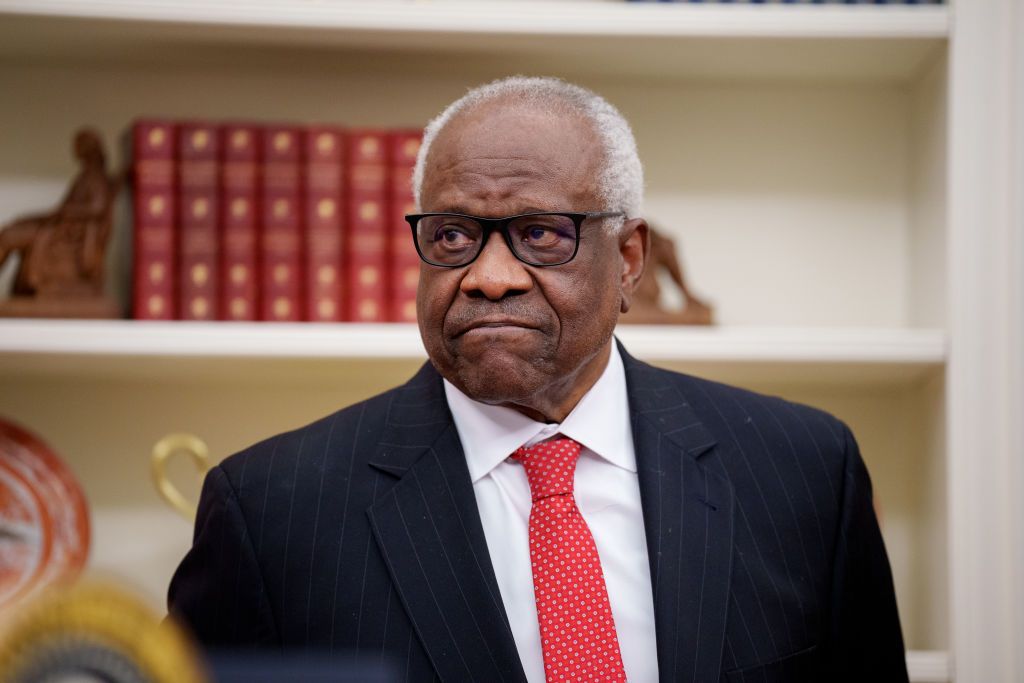
# Supreme Court Justice Clarence Thomas Reflects on Judicial Relationships and Personal Bonds
Justice Clarence Thomas shared reflections on his relationships with fellow justices and the personal connections that develop within the Supreme Court, during remarks at a judicial conference. Thomas emphasized the importance of maintaining friendships that transcend ideological and jurisprudential disagreements among the nine justices.
The justice noted that despite fundamental differences in judicial philosophy, justices can and do develop "deeper" personal bonds based on shared values unrelated to their official work. Thomas highlighted how collegial relationships within the Court extend beyond chambers, enabling justices to find common ground as individuals even when their legal opinions diverge sharply.
Thomas's comments arrive amid a period of heightened public attention to Supreme Court dynamics and institutional cohesion. The remarks underscore a reality often obscured by the intensity of written opinions and public disagreements. Justices frequently interact in private settings, dine together, and participate in social events where personal relationships flourish independent of doctrinal disputes.
The justice's reflection touches on broader questions about institutional culture at the Court. Supreme Court scholarship and commentary frequently focus on voting blocs, ideological alignments, and the contours of majority and dissenting opinions. Thomas's remarks suggest that the informal architecture of judicial relationships remains an understudied but meaningful component of how the institution functions.
His comments come as the Court faces external pressure regarding its legitimacy and public confidence. Personal relationships among justices do not dictate legal outcomes, but they may influence the tone of internal discourse and the Court's capacity to operate as a functional collegial body.
The remarks reflect Thomas's long tenure on the bench, spanning three decades. Throughout his time on the Court, Thomas has maintained working relationships with justices across the ideological spectrum while remaining firm in his originalist interpretive methodology. His willingness to publicly discuss the relational dimensions of service on the nation