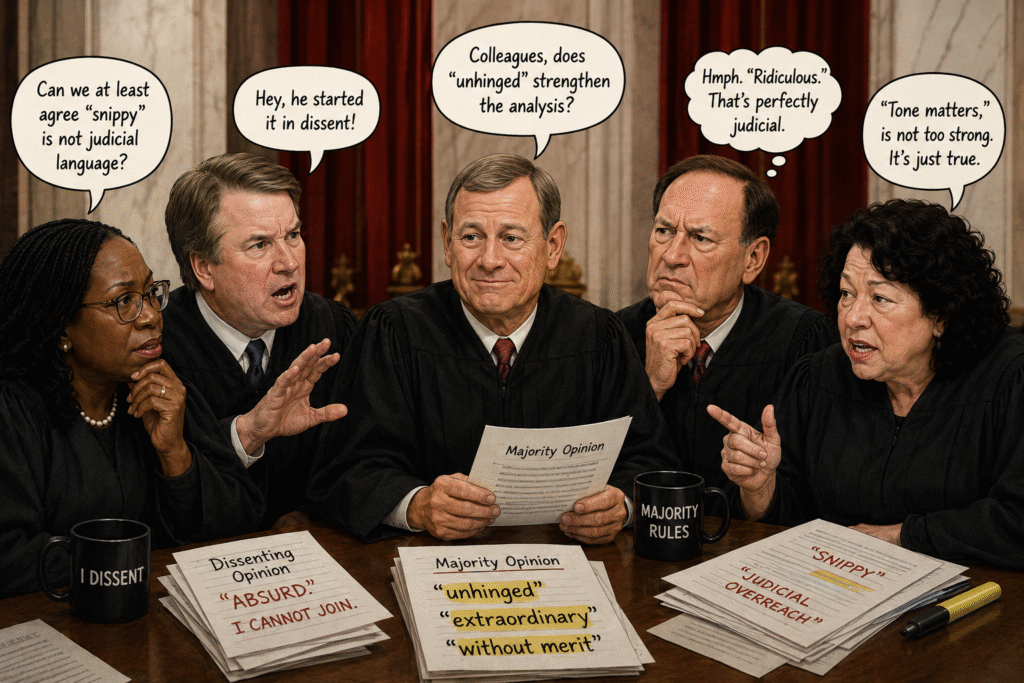
Supreme Court opinions have grown increasingly hostile in tone, according to analysis of the justices' writing patterns. Experts studying interpersonal dynamics among the nine justices identify a shift toward more emotional language, sarcasm, and direct criticism in majority opinions, concurrences, and dissents.
The trend reflects deepening ideological divisions within the Court. Justices now address one another with sharper rhetoric, abandoning the traditionally restrained decorum that once characterized even the most contentious rulings. This shift appears most pronounced in recent terms, particularly in cases involving abortion, voting rights, and separation of powers.
Legal scholars attribute the change to several factors. The confirmation process has become more polarized, elevating justices who hold stronger ideological commitments. The Court's six-to-three conservative majority has also emboldened justices to write with less restraint, knowing their positions command majority support. Additionally, each justice understands that their opinions will receive immediate public scrutiny and media analysis, creating incentive to craft memorable language rather than consensus-focused arguments.
The practical consequence extends beyond tone. Increasingly acerbic opinions erode the institution's perceived neutrality and independence. When justices deploy sarcasm or dismissive language toward colleagues, public confidence in judicial impartiality declines. This matters for enforcement. Courts depend partly on voluntary compliance with their rulings. Opinions that read as politically motivated rather than legally grounded undermine that legitimacy.
The shift also affects lower court judges, who look to Supreme Court opinions for guidance on doctrine. Emotional writing can obscure the actual legal holdings, forcing circuit judges to parse heated language to identify binding principles.
Legal commentators debate whether this reflects genuine institutional dysfunction or natural expression of authentic disagreement. Justice Clarence Thomas's originalist methodology clashes fundamentally with progressive justices' living constitutionalism. Perhaps sharper rhetoric simply makes those differences transparent