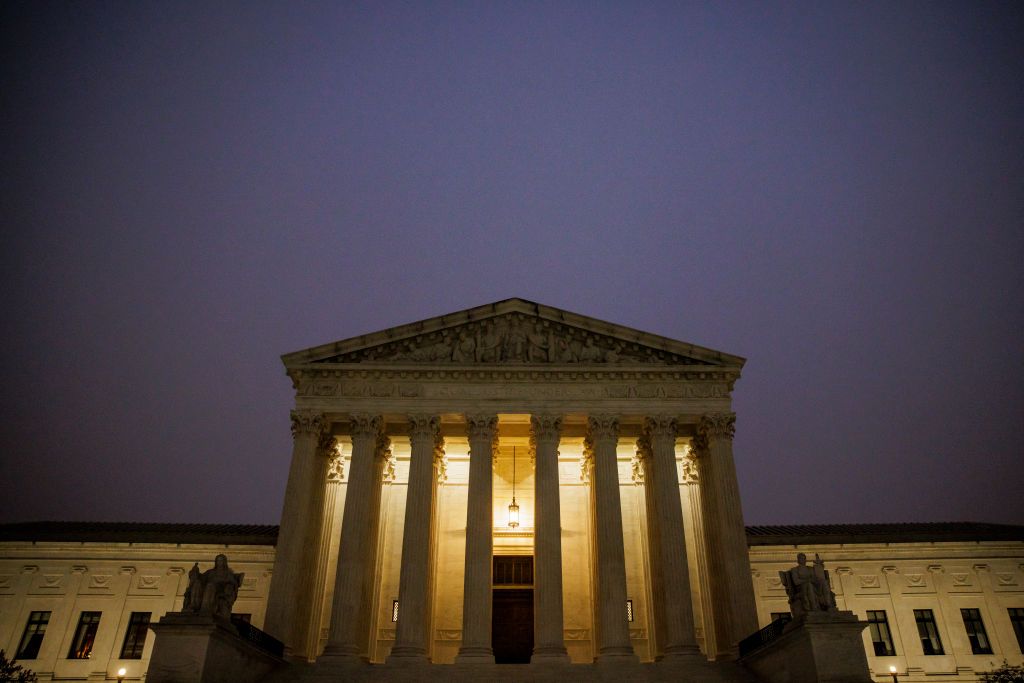
Republican legislators in Virginia filed a brief with the U.S. Supreme Court urging justices to uphold the Virginia Supreme Court's redistricting decision rather than overturn it on appeal. The Virginia Supreme Court had previously ruled on the state's legislative district maps, and Republicans sought to preserve that outcome at the federal level.
The filing represents an unusual posture for Republican legislators, who typically challenge unfavorable redistricting rulings. However, the Virginia Supreme Court's decision apparently benefited Republican interests or aligned with their preferred map configuration, prompting them to defend it before the nation's highest court.
The case touches on fundamental questions of legislative apportionment and the constitutional authority of state courts to review redistricting plans. Under the Elections Clause of the U.S. Constitution, state legislatures bear primary responsibility for drawing congressional and state legislative districts. The Virginia Supreme Court's involvement raised questions about whether judicial intervention in redistricting exceeds proper constitutional bounds, particularly when federal courts might otherwise have jurisdiction.
Republican legislators' intervention in the case signals deep divisions within the redistricting debate. The group faced potential challenges from voters or competing political interests who opposed the Virginia Supreme Court's map or sought different district configurations. By urging the Supreme Court to affirm the Virginia court's ruling, Republicans sought to prevent any disruption to the maps they deemed acceptable.
The Supreme Court's handling of the case carries implications for state court authority over redistricting nationwide. A decision favoring the Republicans' position would affirm state judicial power to modify legislative maps. Conversely, a ruling against them could restrict state courts' redistricting authority, concentrating map-drawing power more exclusively in legislative hands and potentially limiting judicial review of partisan gerrymandering claims.
The brief filing occurred within the context of ongoing nationwide litigation over redistricting following the 2020 census. Many states faced legal challenges to their new legislative maps, with disputes