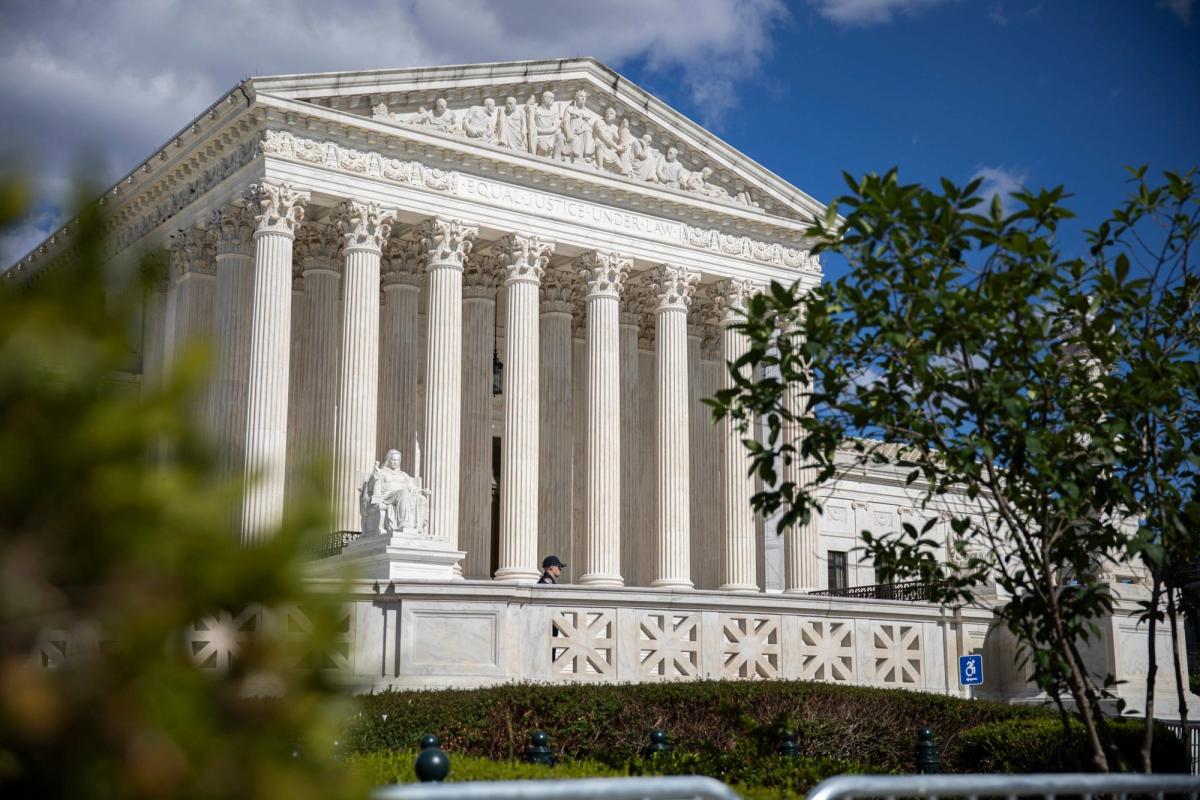
# Court Agrees to Immediately Finalize Voting Rights Act Decision; Refuses Request to Reverse
The Supreme Court has refused to reverse its recent Voting Rights Act decision and moved to finalize the ruling immediately, rejecting a request to reconsider or stay the judgment.
The decision reflects the Court's firm stance on a contentious voting rights matter that divided the bench. By declining to revisit the case, the justices signaled that the lower courts must begin implementing the decision without delay. The refusal to grant a stay means the ruling takes effect across affected jurisdictions right away, preventing any extended transition period.
This action typically follows a close decision where one side petitioned for reconsideration or requested the Court freeze the judgment's implementation. The Court's rejection of that request indicates confidence in the majority's reasoning and willingness to let the consequences flow immediately. The practical effect ripples through state election systems and voting procedures.
The Voting Rights Act, 52 U.S.C. Section 10101 et seq., has long governed federal oversight of elections in jurisdictions with histories of discrimination. Supreme Court decisions interpreting or limiting the statute reshape voting access nationwide. When the Court finalizes a ruling quickly, states and local officials must scramble to comply rather than maintain existing procedures while appellate options remain open.
The refusal to reverse signals the majority likely won't budge even if new petitions arrive. It ends speculation about whether swing justices might reconsider their votes or whether procedural mechanisms could delay implementation.
Voting rights organizations and election administrators now face concrete requirements rather than uncertainty. States previously operating under different standards must adjust registration systems, polling place operations, or voter ID requirements depending on what the underlying decision mandated. The immediate finalization compresses the timeline for compliance and leaves little room for negotiating transition periods.
This development carries consequences for the 2024 election cycle and